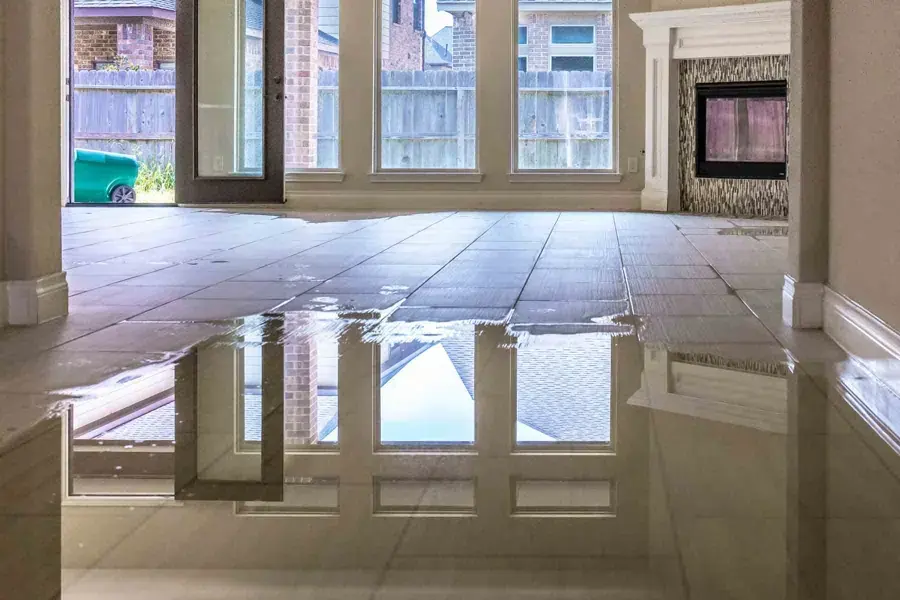
When storm water crosses a Goose Creek threshold, the first day decides how much of the house can be saved. Water that comes from outside is handled differently from a pipe leak, and the order of the first steps matters more than speed alone.
Key takeaways
- Water that enters from the yard or street is storm flood water, and it is treated as contaminated from the start.
- Goose Creek sits on flat, low ground with a shallow water table, so water tends to linger near foundations instead of draining away.
- The first priorities are safety at the electrical panel, photographs of the high water mark on the walls, and removing standing water before it wicks upward.
- Wet carpet pad, insulation and lower drywall are usually the first materials to come out, because they hold water the longest.
- A drying plan with moisture readings, not a few fans, tells the owner when the structure is actually dry.
Why water lingers around Goose Creek homes
Goose Creek is named for the creek and the Goose Creek Reservoir that run through the city, and Foster Creek and the Cooper River to the east add to the water around it.
The ground here is flat and low, and the water table is shallow. After a tropical downpour there is very little slope to carry water off, so it pools in yards and presses against slabs and crawl space vents.
Most homes in the city are single family houses from the 1970s to the 2000s, and the newer Carnes Crossroads homes date to the 2010s. Whatever the era, water that rises outside a house finds a way in through door thresholds, garage doors, sill plates and floor drains.
- Standing water in a yard after rain is a warning sign, because it can rise past a threshold.
- About 50 inches of rain falls in a typical year, so the ground is often already wet before a storm arrives.
- Hurricane season runs from June 1 to November 30, with summer thunderstorms adding to the total.
What counts as storm flood water
A supply pipe leak puts clean water into a house. Flood water does not.
Water that has crossed a yard, a street or a ditch carries soil, debris and whatever else it passed over.
That is why storm water is handled as contaminated. Porous materials that soaked it up, such as carpet pad, insulation and the bottom of drywall, are normally removed instead of dried in place.
Hard surfaces such as tile, sealed concrete and framing can be cleaned and dried, and the crew sorts every room into those two groups during the first walk through.
Outside water versus a plumbing leak
If the water came up through a floor drain or under a door during a storm, it is flood water. If it came from a broken supply pipe, it is a different loss with a different cleanup.
The difference changes what is removed and what insurance paperwork will say.
Why the source matters for the claim
Many homeowner policies treat rising outside water differently from sudden pipe damage. Photographs that show where the water entered help the owner explain the loss accurately to the insurer.
The first day, in order
The first day is a sequence, and skipping a step costs time later. The list below follows the order a restoration team normally uses when a Goose Creek house has taken on storm water.
Before anyone walks in
Standing water and live electricity do not mix. If the water is above outlets or the panel, the power should stay off until an electrician or the crew says otherwise.
Never wade through a flooded garage with a freezer or a charger running.
- Switch off power to wet areas only if the panel is dry and reachable.
- Keep children and pets out of the water.
- Wear boots and gloves, because the water is not clean.
Photographs and a quick record
Before anything moves, photographs of the high water mark on walls, the depth in each room and the damaged belongings give the insurer a record that cannot be rebuilt later. A short note about when the water came in is enough.
What comes out first
Standing water is pumped or extracted first, because every extra stretch of contact lets water climb into drywall by wicking. Wet rugs, pad and soaked insulation follow, then loose items from the lowest shelves.
How extraction and drying work together
Extraction removes the bulk of the water, and drying handles what the walls and floors still hold. The two stages are different, and a house that gets only the first stage stays damp inside.
The water extraction service in Goose Creek covers the pumping stage, and the storm water damage service explains how outside water is classified and handled.
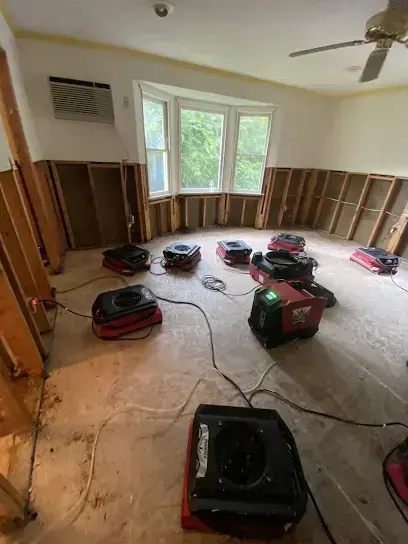
After extraction the crew takes moisture readings in drywall, framing and flooring. Those readings set the targets, and the equipment is placed to meet them: air movers across wet surfaces, dehumidifiers to pull moisture out of the air, and removal where a material cannot dry.
- Moisture readings are logged on day one and repeated on each visit, so progress is visible.
- Wall cavities may be opened with small cuts if the readings show water behind the drywall.
- Humid Lowcountry air slows drying, so open windows rarely help and often make things worse.
- Equipment stays until the readings reach the dry standard, not for a set number of days.
Hanahan and the same creek system
Goose Creek does not stop at the city edge. In neighboring Hanahan, the Goose Creek Reservoir sits in the middle of the city, and Goose Creek can overflow during king tides or heavy rainfall.
That matters for Goose Creek homeowners because the same creek can rise from the tide side and the rain side at once. The Hanahan storm water damage page covers how that plays out across the border, and the Hanahan hub lists the other water problems there.
Storms this area already knows
Local owners have a long list of storms to measure against. Hurricane Hugo struck in September 1989, the October 2015 flood followed, and Hurricane Matthew arrived in October 2016.
Hurricane Irma came in September 2017, Hurricane Ian in September 2022 and Tropical Storm Debby in August 2024. Each one reminded the area that water arrives from both the creeks and the sky.
A house that has flooded once is more likely to flood again, which is why the first cleanup should include photographs, moisture readings and a written scope. Those records help with insurance, and they help with any later repair.
Common mistakes in the first day
Most of the damage that spreads after a flood comes from small choices made in the first day.
- Waiting for the yard to drain before starting extraction.
- Running a household vacuum on standing water.
- Leaving wet carpet pad under dry carpet.
- Using heaters to speed drying, which can push moisture into walls.
- Throwing away damaged items before photographing them.
Questions
Is storm flood water different from other water damage?
Yes. Water from outside has crossed yards and streets and is treated as contaminated, so porous materials that absorbed it are usually removed rather than dried.
How soon should water come out of a Goose Creek house?
As soon as it is safe. Extraction starts as soon as the power question is settled, because water keeps moving upward into drywall and cabinets the longer it sits.
Why does water stay near Goose Creek foundations?
The ground is flat and low and the water table is shallow, so rain has little slope to run off and tends to hold close to the house.
Should windows be opened to dry a flooded house?
Usually not. Lowcountry air is humid, and open windows can bring more moisture in. Dehumidifiers and monitored air movers dry the structure on a measured schedule.
Does the first day affect an insurance claim?
It can. Photographs of the high water mark and damaged contents, plus moisture readings from the first visit, document the loss before anything is removed.