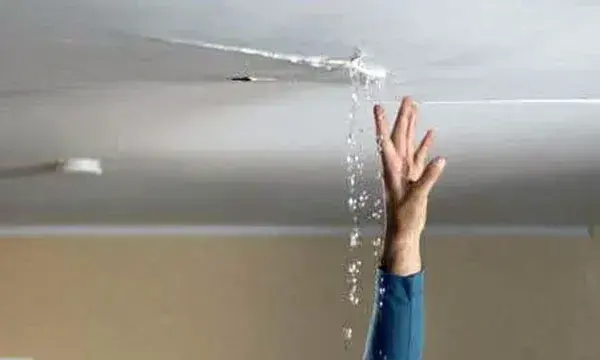
A tub, toilet, supply pipe or drain above can soak the ceiling below for days. The response team finds the source, opens the ceiling safely and dries the joists and drywall.
Thermal imaging Safe ceiling removal Joist and cavity drying
Right now
First steps for ceiling leak water damage in Goose Creek
1
Stop the fixture above
Turn off the toilet or fixture supply valve, or the main shutoff if the source is unclear.
2
Switch off power to the room
Water near a light or fan box is a shock hazard.
3
Catch the water
Use buckets and towels, and move furniture and electronics out.
4
Stay clear of a sagging ceiling
Wet drywall can drop without warning.
Ceiling Leak Water Damage: the trade facts
Water category1 to 2, by source
Typical drying3 to 5 days
Drying standardIICRC S500
Common sourceTub, toilet or pipe on the floor above
An interior ceiling leak starts inside the house: a failed toilet seal, a shower pan, a tub drain, a supply pipe in the floor system or a washing machine on the second floor. In Goose Creek two-story homes, the ceiling under an upstairs bathroom or laundry is the usual spot. The water spreads across the top of the drywall and along the joists before it shows as a stain or a drip, so the wet area is usually bigger than the stain.
How ceiling leak damage is handled
The tech who does the walkthrough maps the ceiling with thermal imaging and meters and checks light fixtures and fans in the wet area before power goes back on.
The mitigation team opens sagging or saturated drywall in a controlled way, catching the water held above it.
The drying team dries the joists and the subfloor of the room above with air movers, dehumidifiers and cavity drying.
A plumber repairs the fixture or pipe; the restoration crew handles the drying.
Typical cost ranges
What does ceiling leak water damage cost in Goose Creek, SC?
In Goose Creek, SC, ceiling leak water damage typically runs $900 to $7,000. The size of the wet ceiling, how long the leak ran, whether the room above was affected and how much drywall and insulation comes out move the number most.
Small stain, caught early
$900 to $2,200
Thermal mapping
Drying in place
Daily readings
Ceiling opened
$2,200 to $4,500
Wet drywall removed
Joist drying
Electrical checks
Ceiling, walls and floor above
$4,000 to $7,000
Subfloor drying above
Wall cavity drying
Flooring work
Ranges are typical figures, not a quote. The category of water, the square footage, the material class and how fast drying started move the number most. The Goose Creek water damage cost calculator gives a closer range.
Step by step
How ceiling leak water damage is handled in Goose Creek
The tech who does the walkthrough finds the source and maps the moisture before equipment goes down, and the drying team keeps it running until the readings say dry.
1
Trace
The walkthrough tech maps the wet ceiling and finds the source above.
2
Make safe
The response team keeps power off in wet fixtures.
3
Open
The mitigation team removes saturated drywall in a controlled way.
4
Dry
The drying team dries the joists and the floor system above.
01
Electrical safety in a wet ceiling
Water that reaches a light fixture or ceiling fan box is a shock hazard. Power to the room stays off until the fixtures and wiring are dry and checked, and the OSHA safety rules guide how workers handle wet electrical areas.
02
Ceiling leak versus roof leak
A ceiling leak sits under a bathroom or pipe and shows whatever the weather. A storm roof leak sits under the attic and shows during wind-driven rain. The EPA WaterSense program explains how to spot leaking toilets and fixtures early.
Goose Creek, SC service area
Service area
Ceiling leak water damage across Goose Creek and Berkeley County
The Goose Creek restoration crew covers ZIP 29445, from Crowfield Plantation and Sedgefield to Boulder Bluff, Liberty Hall, Carnes Crossroads and the homes off St. James Avenue and Red Bank Road.
Nearby coverage reaches Hanahan, North Charleston, Summerville, Ladson, Moncks Corner and Charleston.
Ceiling Leak Water Damage questions in Goose Creek, SC
Why is the wet area bigger than the stain?
Water spreads across the top of the drywall and along the joists before it soaks through, so meters usually find more wet ceiling than the stain shows.
Does the ceiling have to be cut?
Not always. Firm drywall with a small wet area can often dry in place. Sagging or saturated drywall comes down.
Is it safe to turn the lights on?
Not in the wet area. Keep power off to fixtures that got wet until they are dry and checked.
How long does a ceiling take to dry?
Usually three to five days when the leak is stopped early.
Who fixes the leak upstairs?
A plumber repairs the fixture or pipe. The restoration team dries the ceiling and the floor above.
Is a ceiling leak covered by insurance?
A sudden leak is often covered. Damage from a slow leak that ran for a long time may be treated differently. Coverage depends on your policy, so check with your own insurer.