North Charleston Water Damage Restoration
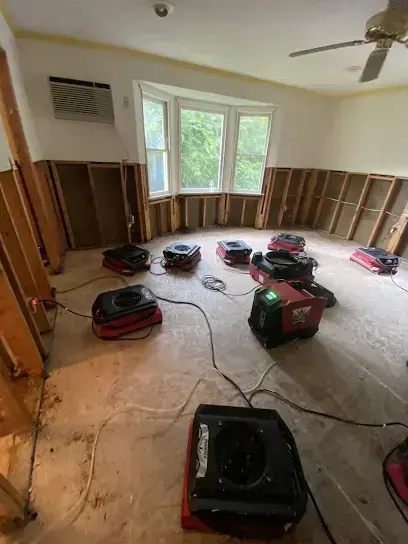
Water damage crews cover homes, apartments and shops from Park Circle to Northwoods, pulling standing water out first and then drying wet walls, subfloors and ceilings until the moisture readings match dry reference material.
(888) 532-8921Call about water in North CharlestonPipe breaks, tidal flooding and sewage backups are all handled with logged moisture readings.
Five moves that limit the damage before crews arrive
- 1
Stop the source
Close the shutoff valve for a failed pipe or appliance. Storm or sewer water means keep everyone out of it.
- 2
Cut the circuits
Switch off breakers for wet rooms only if the panel is dry and you can reach it without standing in water.
- 3
Photograph everything
Take wide and close photos of the water line, damaged flooring and belongings before anything moves, since adjusters ask for them.
- 4
Lift what you can
Raise small furniture, rugs and papers onto dry surfaces, and leave heavy items for the crew rather than straining.
- 5
Call the right party
Main breaks go to Charleston Water System, while a sewer backup calls for the sewer provider before a plumber.
Water damage services in North Charleston
Each service has its own North Charleston page covering the cause, the drying method, typical pricing and what a property owner should do next, whether the property is a house, an apartment or a shop.
 Common in North Charleston
Hurricane and Storm Water Damage
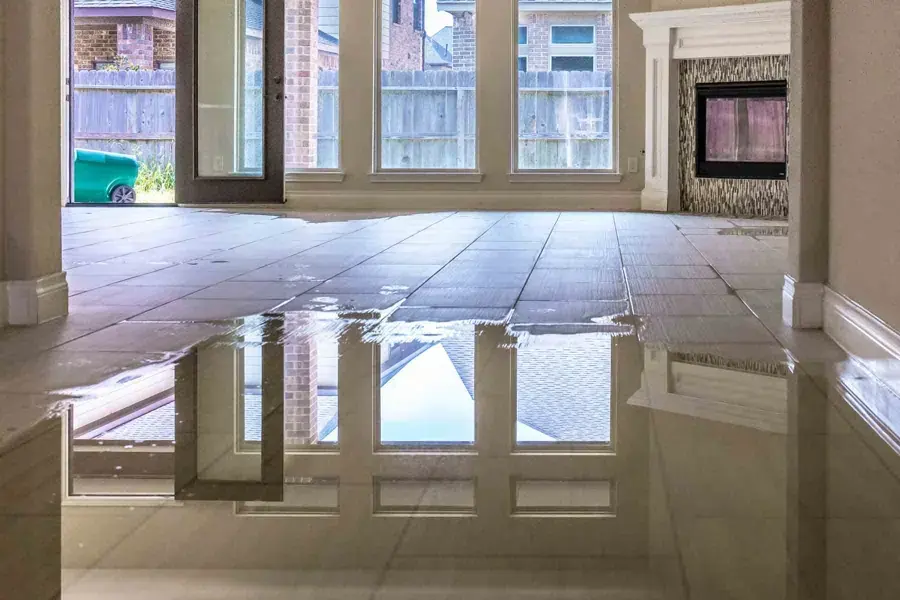
Cooper River surge and heavy rain flood ground floors, so crews pump, strip wet finishes, disinfect and dry.
See hurricane and storm water damage Common in North Charleston
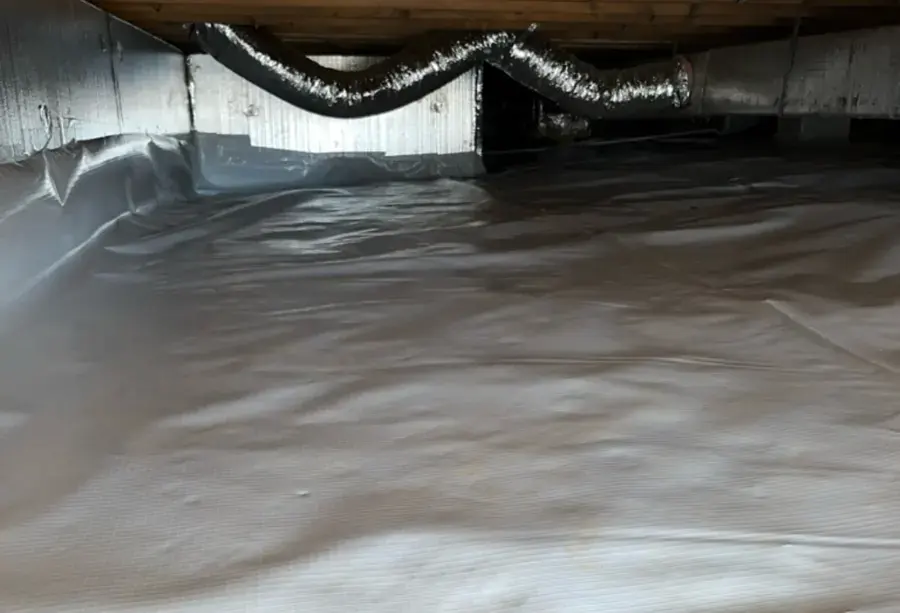
Crawl Space Water Damage
Standing water under raised floors soaks insulation and joists, and drying has to reach the space nobody sees.
See crawl space water damage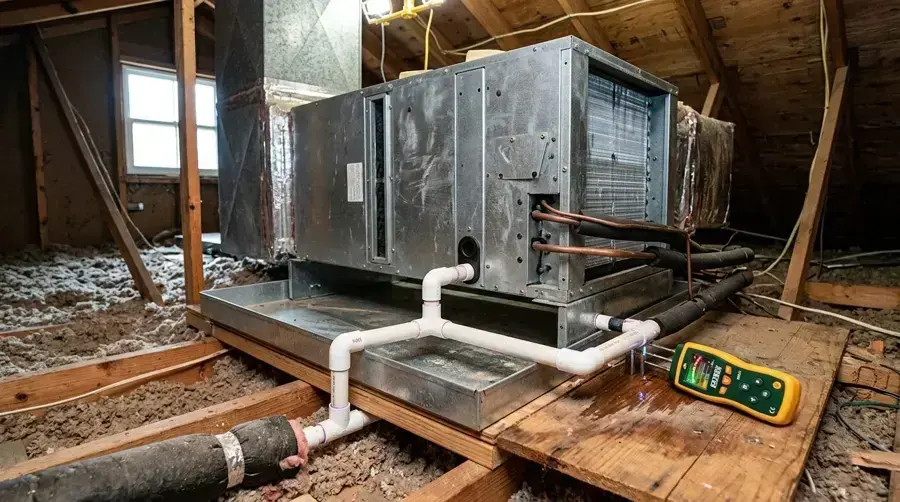
AC Condensate Leak Water Damage
An overflowing condensate pan stains ceilings and soaks attic insulation, and units below often take the leak.
Storm Roof Leak Water Damage
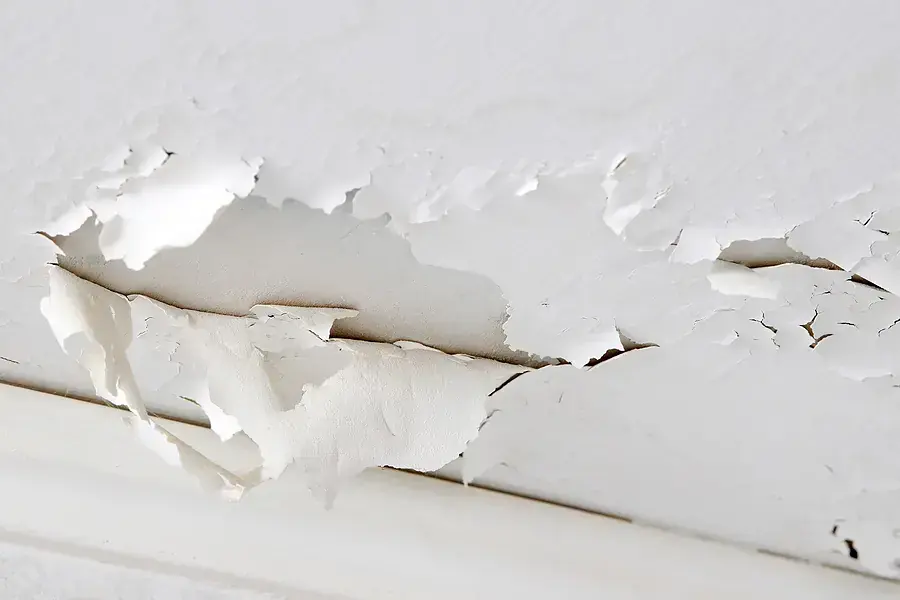
Wind driven rain through damaged roofing wets attic insulation and ceilings before the stain shows.
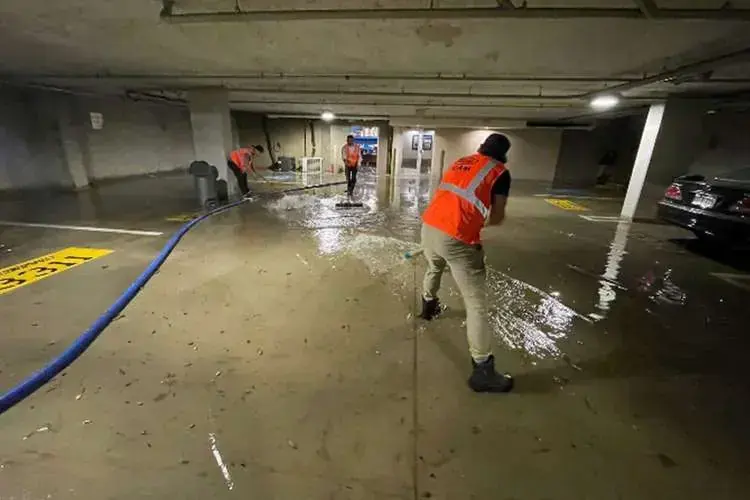
Emergency Water Extraction
Low coastal ground leaves standing water after storms, so pumps and truck-mounted extractors start the dry-out.
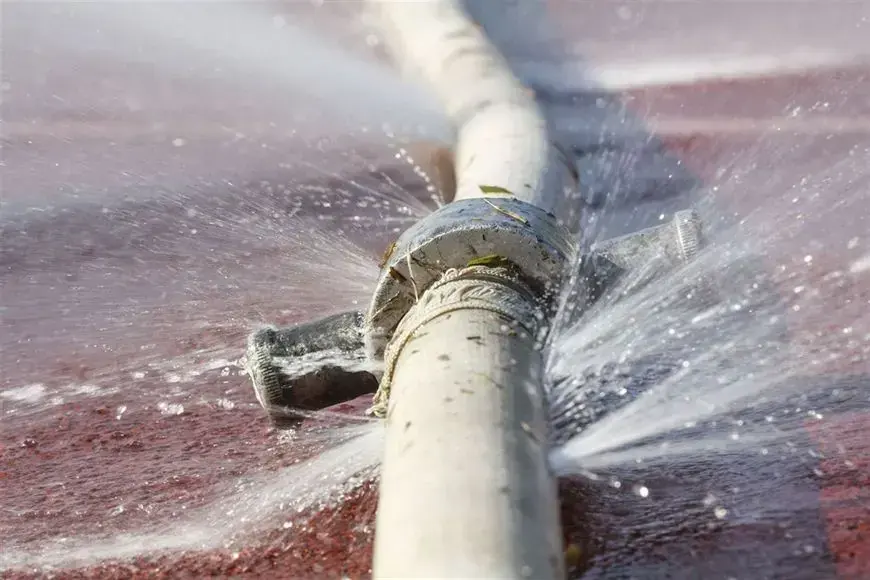
Burst Pipe Water Damage
A split supply pipe floods fast, so crews stop the spread, open wet cavities and dry in place.
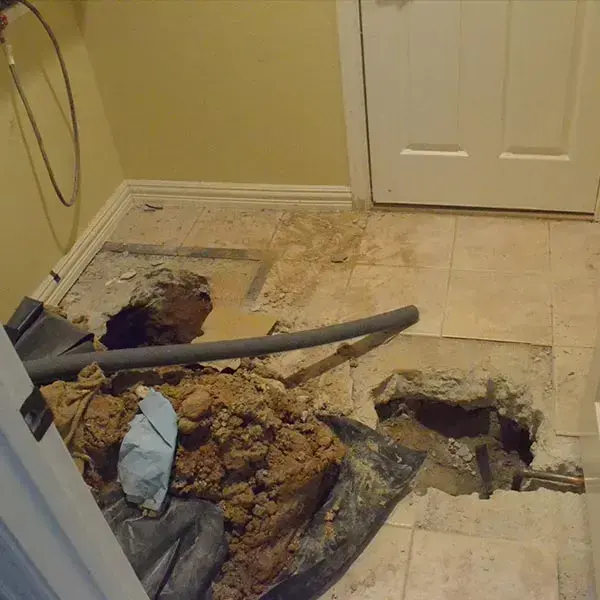
Slab Leak Water Damage
A leak under a concrete floor shows up as warm spots or high bills, and drying must reach the slab itself.
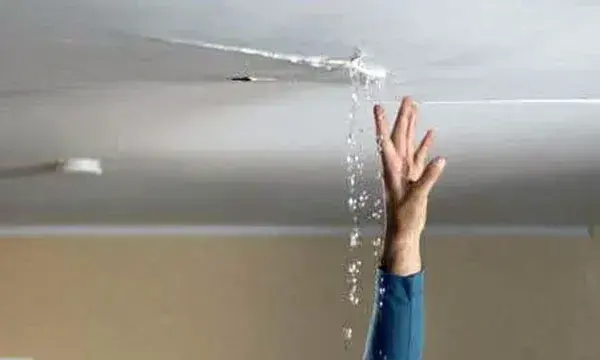
Ceiling Leak Water Damage
Water dripping through a ceiling often starts in the unit above, so crews trace the source and dry the cavity.
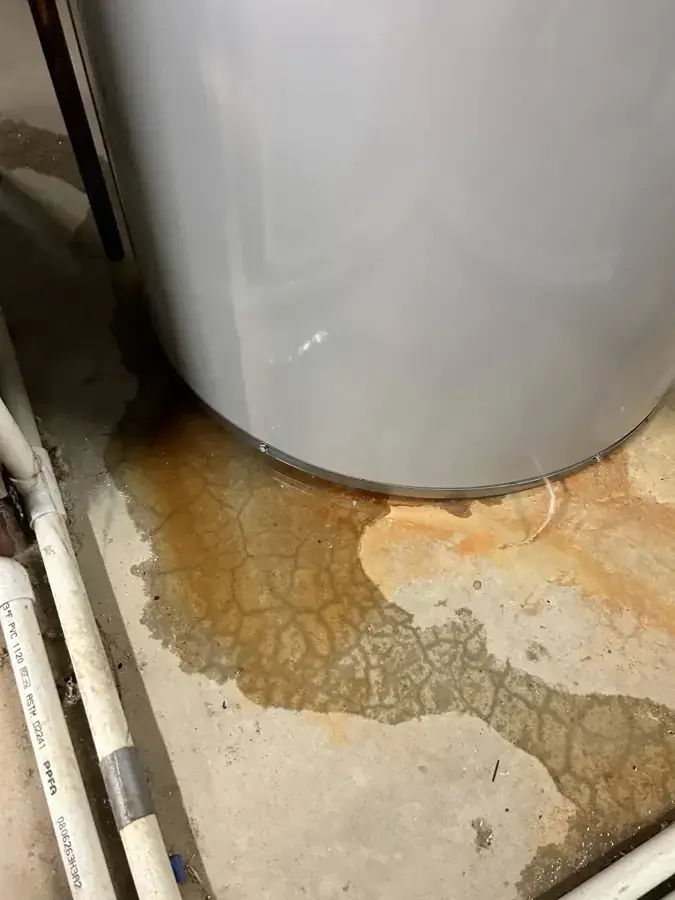
Water Heater Leak Cleanup
A failed tank releases a steady volume of water into garages, closets and nearby rooms.
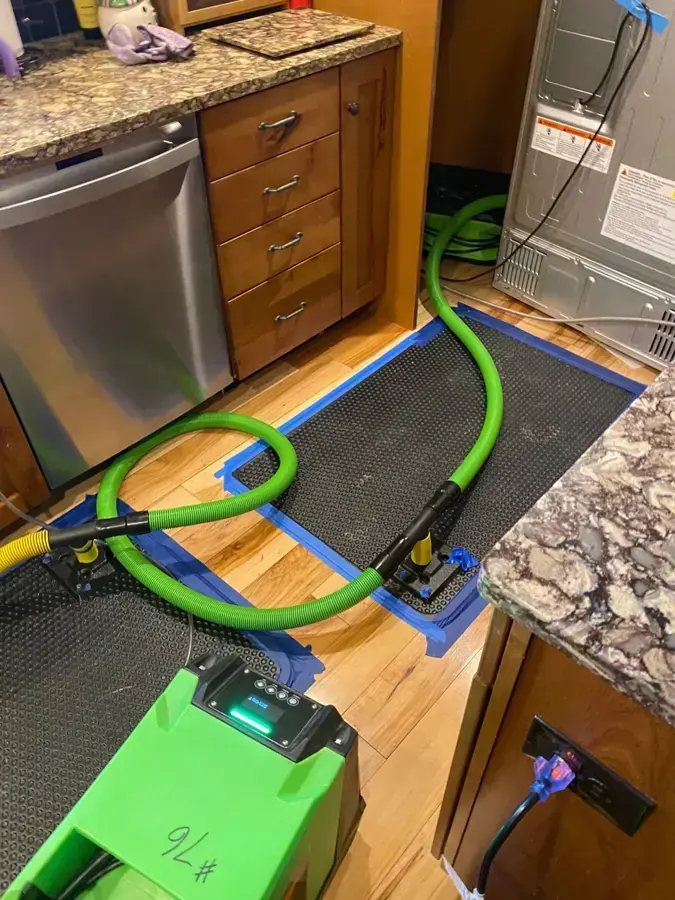
Appliance Leak Water Damage
Washing machine and dishwasher leaks spread into cabinets, flooring and the apartments below.
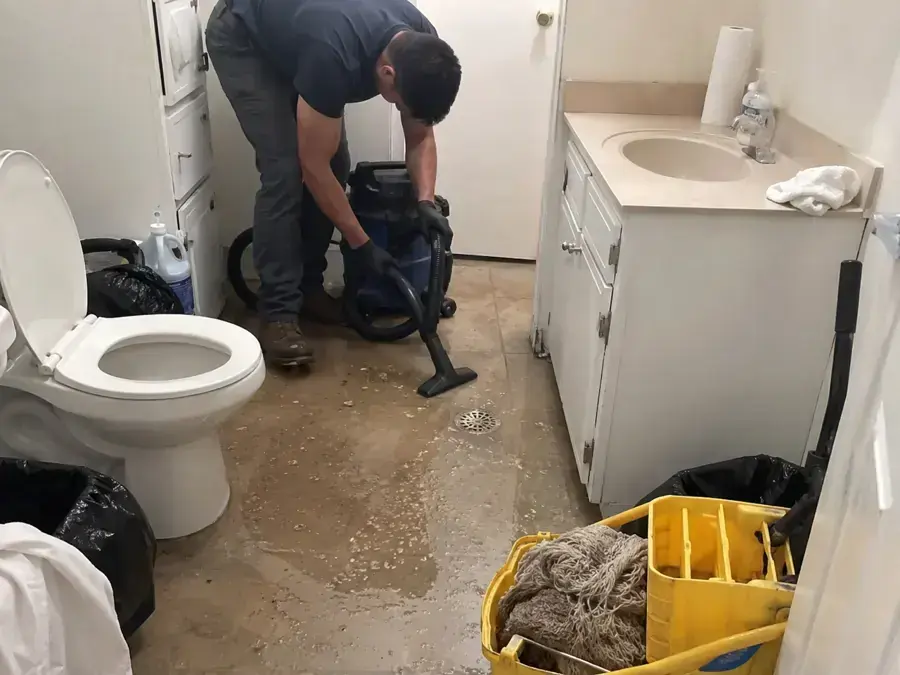
Bathroom and Shower Leak Water Damage
Shower, tub and toilet leaks soak subfloors and the room beneath, so drying follows the water through walls.
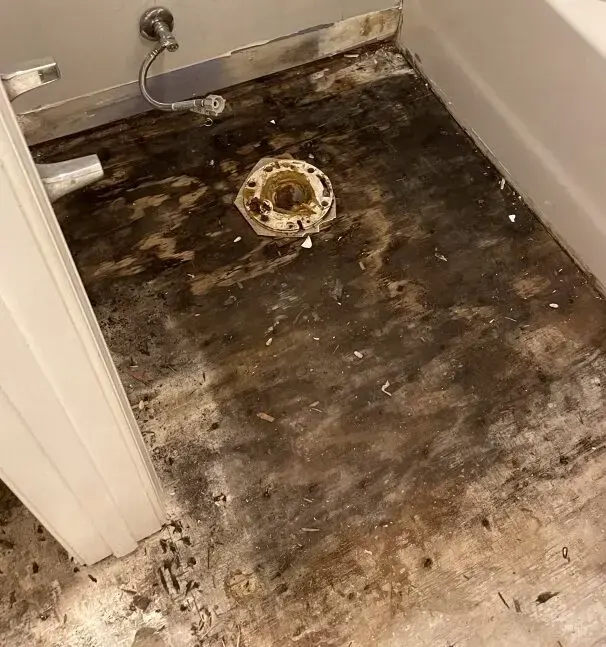
Sewage Backup Cleanup
Contaminated backups need protective gear, removal of porous materials and disinfecting before any drying begins.
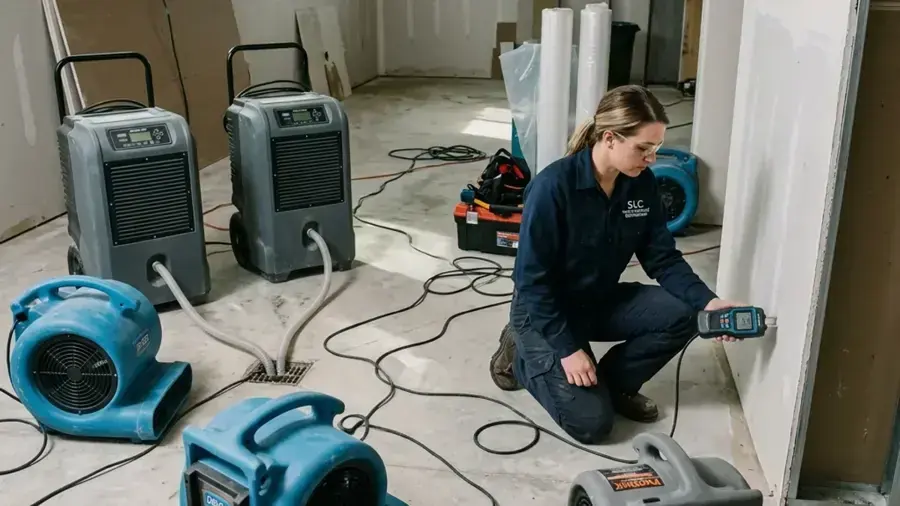
Structural Drying and Dehumidification
Air movers, LGR dehumidifiers and daily moisture readings dry framing, subfloors and slabs to a measured target.
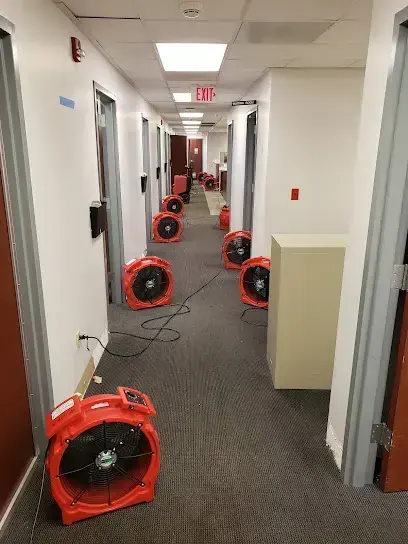
Commercial Water Damage
Apartment communities, shops and offices get phased work and after-hours drying so the building keeps running.
Clean, gray and black water change the work
Clean water
A supply pipe, a failed water heater or a roof leak starts clean, and quick removal keeps it from turning gray.
Burst pipe repairsGray water
Washing machines, dishwashers and tubs release used water that carries soap and bacteria into floors and cabinets.
Appliance leak cleanupBlack water
Sewage, creek runoff and tidal surge are contaminated, so porous materials go out and surfaces are disinfected.
Sewage backup cleanupDrying measured by readings instead of guesswork
Technicians map wet areas with a moisture meter and a thermal camera, set air movers and LGR dehumidifiers to match the room's drying class, and record humidity and material readings at each visit. The log shows adjusters that the structure reached a dry baseline, not just that equipment ran. See the structural drying page for the full method.
- 1
Map the wet zone
A moisture meter and thermal camera trace water behind baseboards and under floors so no damp section is skipped.
- 2
Pull out the water
Extractors and pumps remove standing water, and soaked pad or insulation leaves the building.
- 3
Place the equipment
Air movers and dehumidifiers are sized to the volume of the room and the type of material.
- 4
Check until dry
Readings repeat on every visit, and equipment stays until each surface reaches the target.
What water damage cleanup costs in North Charleston
Most North Charleston jobs land between about $1,200 and $32,000, depending on how far the water spread, how long materials stayed wet and whether the source was clean, gray or black water, which changes the scope of the work.
Single wet room, caught early
$1,200 to $3,500
- Water pulled out right away
- Drying in place without demolition
- Daily moisture readings
Several rooms or wall cavities
$3,500 to $7,500
- Wall cavities opened and dried
- Pad and baseboard removed
- Complete structural drying
Whole floor flooded
$16,000 to $32,000
- Wide removal and cleaning
- Contents moved out and stored
- Extended drying time
Final pricing follows the moisture map, the water category and the area affected. Photos and daily readings go to the adjuster at each stage, since homeowner and flood policies treat water sources differently.
A restoration crew that knows these streets and these storms
North Charleston sits between two rivers and a creek, so crews here expect surge, saturated ground and apartment leaks that travel between floors. That experience shapes the equipment brought, the order of the work and the notes passed to the adjuster after each visit. Owners hear which materials can stay and which must go before any demolition begins.
Storm season readiness
Hurricane and surge calls get pumps, extractors and containment on the truck before the first walkthrough begins.
Multi-unit know-how
Leaks that start in one apartment and drip into the next are traced floor by floor with moisture mapping.
Paperwork for adjusters
Dated photos, readings and equipment logs are organized so the claim file does not depend on memory.
Tidal flood knowledge
Creek backwash and river surge are treated as contaminated, which changes what is removed and what is kept.
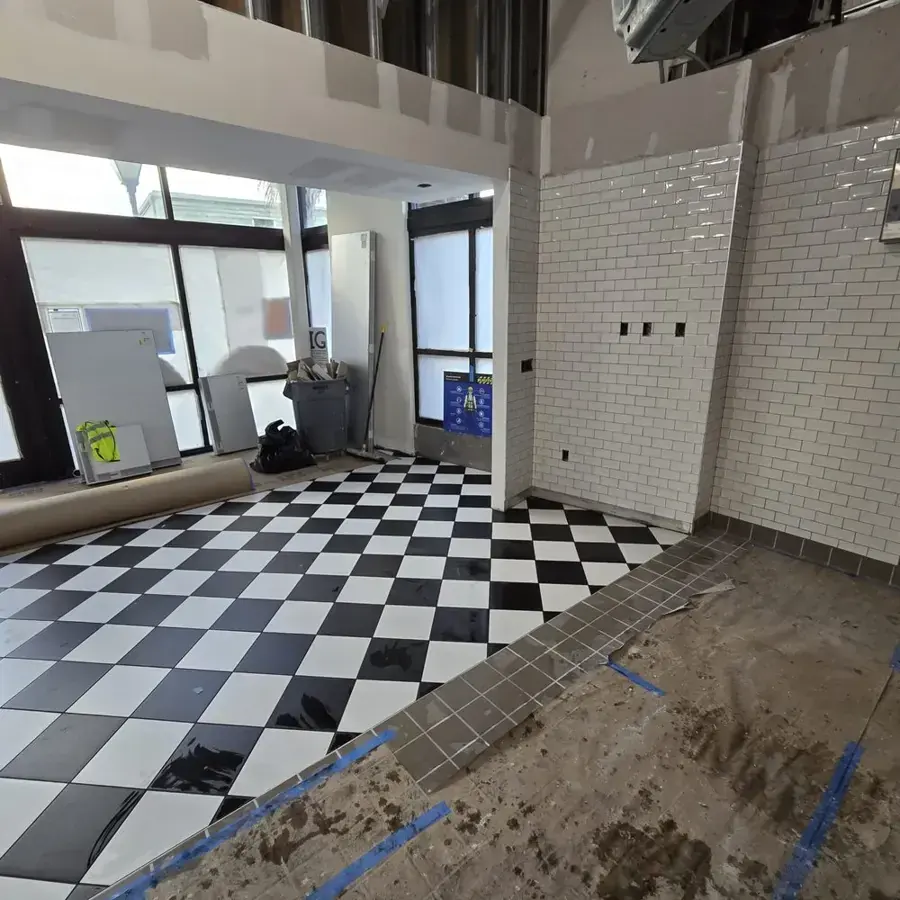
Documentation insurers can use
Every job produces records that an adjuster can read without making a separate site visit.
- Dated photos of the damage taken before any demolition begins
- Moisture readings for every wet material, room by room
- Daily humidity and temperature logs from the drying equipment on site
- Equipment placement and removal dates for the whole job
- Itemized list of removed materials and the contents that were affected
What owners can document
Before the crew starts, walk each affected room and photograph the water line, the flooring, the cabinets and the contents. Keep receipts for emergency purchases and save any notice from the landlord or the utility.
Do not discard damaged items until the adjuster has seen them or approved photos, and write down the date and time the water was first noticed. A short written timeline of who was called and when also helps the claim move faster.
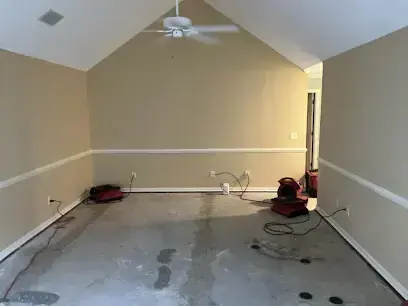
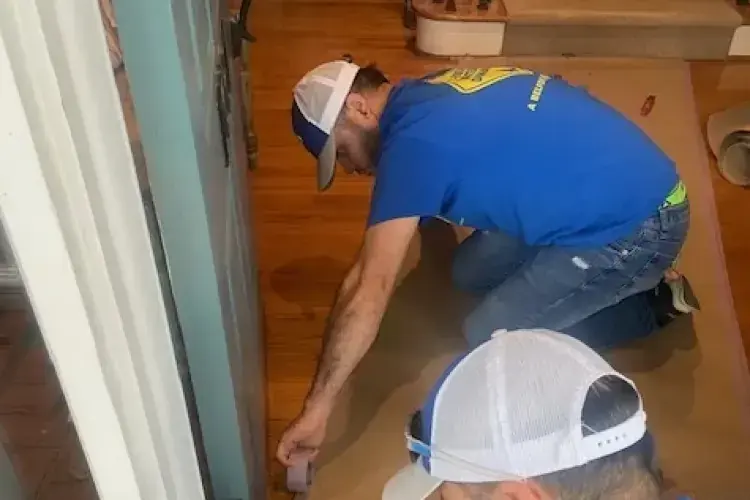
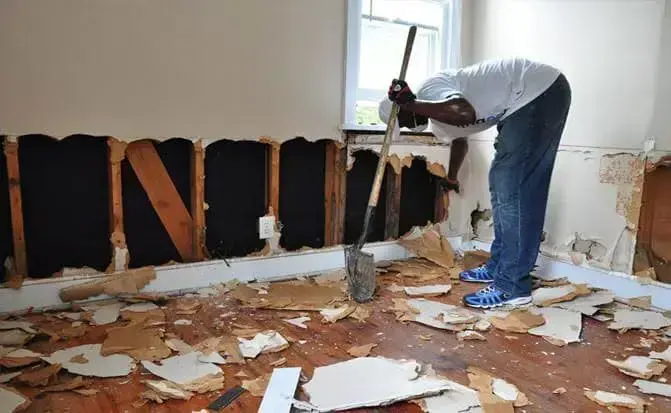
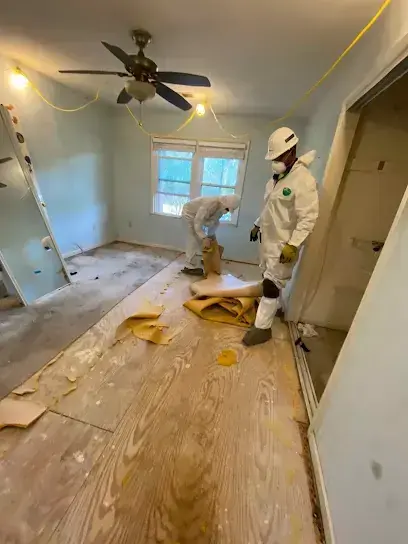
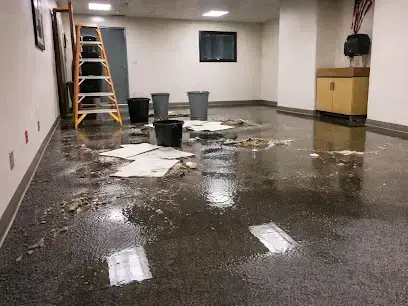
What drying work looks like on a typical North Charleston job
Where crews work in North Charleston
Beyond North Charleston city limits
Neighboring Hanahan has its own page, and the Goose Creek home page lists every service and the other towns this crew reaches.
(888) 532-8921Browse all water servicesNorth Charleston, SC · [email protected]
Neighborhoods and corridors served
ZIP codes
Nearby towns
Why creeks, tides and past storms shape local water damage
North Charleston sits between the Ashley River and the Cooper River, and Filbin Creek crosses the city beside I-526. Low ground collects water after heavy rain and tidal surge, and the neighborhoods around the creek lie in federally designated flood zones.
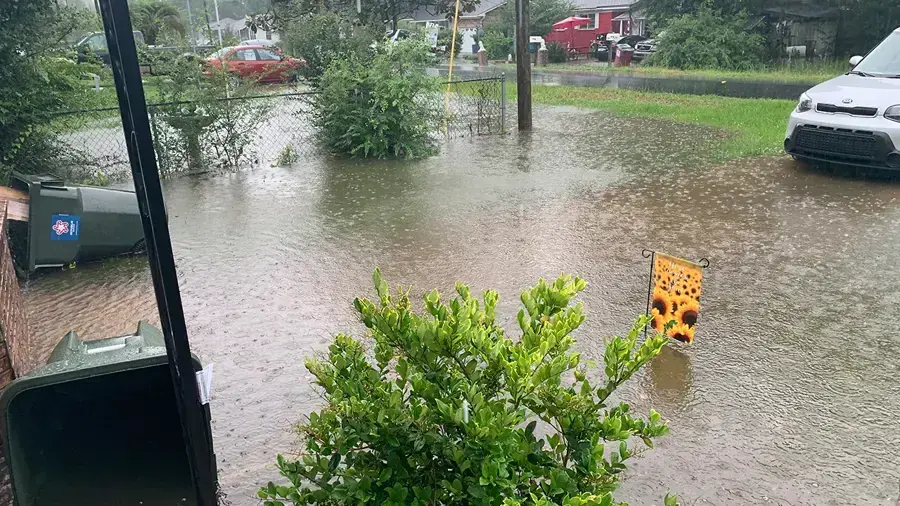
- Filbin Creek backwash: Cameron Terrace residents reported flooding in Hurricane Matthew and Hurricane Irma, plus everyday drainage trouble along the creek.
- Tidal surge: The Cooper River pushes salt water up into Filbin Creek, and a replacement flap gate would ease daily flooding but not storm surge.
- Heavy rain: A 2017 drainage study found the creek basin was driven by tidal surge and by heavy rain together.
- Water main breaks: Charleston Water System mains have failed in Accabee and near West Montague Avenue, leaving homes dry and sometimes under a boil water advisory.
- Winter pipes: Hard freezes are occasional, but pipes in homes without heat or insulation can split when one arrives.
- October 2015
Charleston recorded 11.5 inches of rain in a day, and a flash flood emergency covered Berkeley and Charleston counties.
- 2016 and 2017
Hurricane Matthew and Hurricane Irma flooded the Filbin Creek neighborhoods with surge and rain.
- June 2024
A 24-inch water main broke in Accabee, leaving 55 homes dry and prompting a boil water advisory.
- January 2025
A state of emergency for winter weather warned that pipes could burst in homes lacking heat.
North Charleston water damage questions
How soon should water be removed after a leak?
As soon as possible, because subfloors and drywall keep absorbing water the longer it sits. Early extraction and dryers limit how much material has to be torn out later, which keeps both the repair bill and the disruption smaller.
Does homeowners insurance pay for water damage?
Policies often treat a sudden burst pipe differently from rising flood water or a slow seep. Read the policy, then ask the adjuster which category the loss falls under before any repairs begin.
Who handles a sewage backup in North Charleston?
North Charleston Sewer District asks residents to call before a plumber and keeps a 24 hour emergency line. Its crews do not repair private property, and some addresses are served by Charleston Water System.
What happens when a water main breaks nearby?
A break such as the one in Accabee in June 2024 can cut service and trigger a boil water advisory. The utility repairs the main, and a restoration crew handles any water that reached a building.
Do apartment tenants handle water damage differently?
About a third of local housing units are apartments, and 47 percent of units are renter occupied. Tenants should notify the landlord in writing and photograph the damage before anything is moved.
How long does structural drying take?
Most residential dry-outs take three to five days, though thick materials like hardwood take longer. Daily readings decide when equipment leaves, not the calendar, so a thick floor may need extra visits.
Can flooring be saved after a flood?
Clean water on hardwood or tile can often be dried in place with mats. Carpet pad and anything that touched sewage or creek runoff usually has to go, while solid wood cabinets are often cleaned and kept.
How is creek or tidal flooding handled?
Creek and tidal water counts as Category 3 because it carries contamination. Crews remove porous materials, disinfect hard surfaces and then dry the structure before rebuilding starts.
Do crews handle commercial buildings?
Yes. Retail near Rivers Avenue and Dorchester Road, offices and apartment communities get phased drying that keeps unaffected suites open while the wet areas are treated and the building stays open for business.
What causes pipe damage in winter?
Occasional hard freezes can split exposed pipes, as the January 2025 emergency warning noted. Shut the main valve, open taps below the break and call a drying crew.
Standing water in North Charleston?
Describe where the water came from and how far it has spread, and a crew will explain the first steps and the equipment involved.
Water in the house or shop? Start with a call
North Charleston property owners get a plain explanation of the cause, the water category and the drying plan, plus [burst pipe](/north-charleston-sc/burst-pipe-water-damage) and storm repairs documented for the insurer, so nothing about the job stays a mystery.
- Goose Creek, SC · Berkeley County
- Dried to the IICRC S500 standard
- Find us on Google