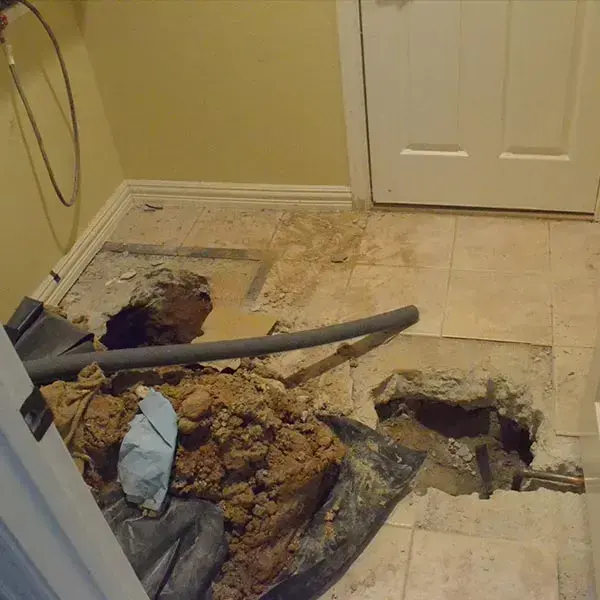
A leak in a pipe beneath a concrete floor shows up as damp flooring, warm spots or a rising water bill, and North Charleston crews dry the slab and everything resting on it.
First steps for slab leak water damage in North Charleston
1
Check the meter
Turn off every fixture and watch whether the water meter still moves.
2
Feel the floor
Warm patches, damp carpet or musty odor near baseboards can show where water is traveling.
3
Shut off the supply
Close the main valve if the leak is active, and keep it closed until a plumber has found the break.
4
Call for mapping
A crew can map the moisture and begin drying before flooring is ruined.
Slab Leak Water Damage: the trade facts
Usual signsWarm floor, damp spots, high bills
Hidden spotsUnder flooring and baseboards
Drying aimNormal slab moisture
Cost range$1,800 to $14,000
Most North Charleston housing was built after 1960, and plenty of it is younger, but no age is immune to a pipe failing beneath a floor. The water finds the lowest path, soaks the underside of flooring and rises into wall bottoms, so the first sign is often a damp baseboard or a bill that suddenly jumps.
How crews deal with slab water
A moisture map across the floor shows where water has moved, even far from the leak.
Flooring and pad come out where water sits underneath, because trapped moisture feeds odor and bacterial growth.
Lower drywall is cut away at the baseboard so wall bottoms can dry.
Desiccant or LGR dehumidifiers dry the slab slowly, which is why extended drying is normal.
Typical cost ranges
What does slab leak water damage cost in North Charleston, SC?
Slab leak damage in North Charleston usually costs from about $1,800 for a small wet area to $14,000 when a long running leak has spread across several rooms, not counting the plumber's repair or any reflooring.
Small wet area
$1,800 to $4,000
Slab moisture mapping
Spot flooring removal
Slab drying
One or two rooms
$4,000 to $8,500
Flooring and pad removed
Lower drywall cut
Desiccant drying
Long-running leak
$8,000 to $14,000
Wide flooring removal
Several rooms dried
Extended slab drying
Ranges are typical figures, not a quote. The category of water, the square footage, the material class and how fast drying started move the number most. The water damage cost calculator gives a closer range.
Step by step
How slab leak water damage is handled in North Charleston
The tech who does the walkthrough finds the source and maps the moisture before equipment goes down, and the drying team keeps it running until the readings say dry.
1
Map
Moisture meters and thermal imaging outline the wet area across the floor.
2
Remove
Flooring, pad and lower drywall that cannot dry are cut out.
3
Dry
Desiccant and LGR units pull moisture from the concrete and walls.
4
Test
Readings at the slab and wall bottoms confirm the target before equipment leaves.
01
Why concrete takes so long
Concrete holds moisture and releases it slowly, so a floor can read wet long after the surface looks fine. Crews take readings at the slab, not just the flooring, and keep equipment running until the numbers settle. A rushed finish is the usual reason odor or flooring problems return later.
02
Plumbers and drying crews
Leak detection and repair belong to a plumber, who may need to open the floor. Drying should begin once the water is controlled, using the same extraction and mapping steps described for a burst pipe.
03
Paperwork for slab leaks
Many policies treat long running leaks differently from sudden breaks, so photos, plumber findings and dated readings matter. Ask the adjuster early, and keep the invoice from the leak detection visit alongside the structural drying log.
North Charleston, SC service area
Service area
Slab leak water damage across North Charleston and nearby towns
Slab leak work covers ZIP 29405, 29406 and 29418, including Northwoods, Windsor Hill and Accabee, as well as the homes and apartments set off Rivers Avenue and Dorchester Road.