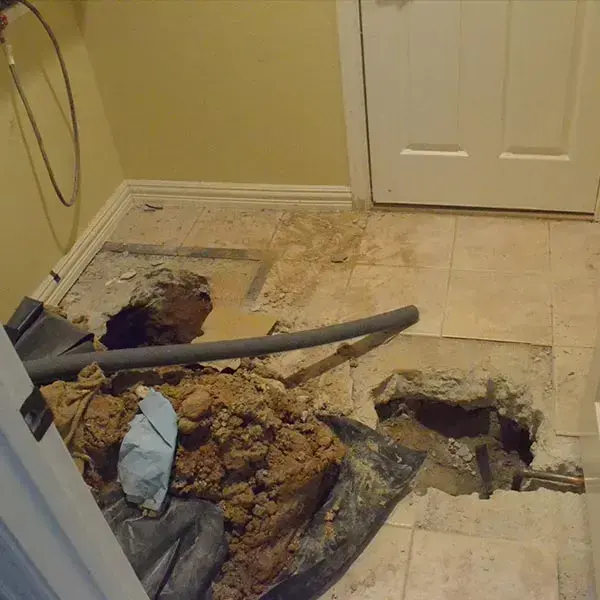
Slab Leak Water Damage Restoration in Charleston, SC
A leak in a pipe under a concrete floor often shows up as a warm spot, a damp edge or an unexplained water bill. The crew maps the moisture and dries flooring, walls and the slab.
First steps for slab leak water damage in Charleston
1
Check the meter
Turn off every fixture and see whether the water meter still moves, which points to a hidden leak.
2
Shut off the water
Close the main valve while a plumber is scheduled, and use bottled water if needed.
3
Note warm spots
Mark any warm or damp floor areas with tape and photograph them.
4
Lift small items
Move rugs and furniture legs off damp flooring to avoid staining.
Slab Leak Water Damage: the trade facts
Warning signsWarm floor spots, high water bill
Hidden problemWater under flooring
Drying toolsDesiccant and LGR units
Repair tradePlumber for the pipe
A leak in a pipe beneath a concrete floor stays invisible until the water finds a way up. Owners notice warm patches on the floor, the sound of running water with every fixture off, or a water bill that jumps without a reason. A plumber confirms the leak, and the restoration crew handles what it soaked.
Where slab water goes
It rises through cracks and joints, soaking carpet pad, tile mortar or the underside of laminate.
It wicks into the bottom of walls, which is why lower drywall and baseboards are tested.
It can sit in the concrete itself, a dense material that dries slowly and needs strong dehumidification.
It may spread to adjoining rooms across the same floor, so readings continue past the visible wet spot.
Typical cost ranges
What does slab leak water damage cost in Charleston, SC?
A small wet patch found early costs the least. A leak that ran for weeks forces wider flooring removal, several dried rooms and a longer slab dry-out, so the total rises with how far the water traveled and how long it sat.
Small wet area
$1,800 to $4,000
Slab moisture mapping
Spot flooring removal
Slab drying
One or two rooms
$4,000 to $8,500
Flooring and pad removed
Lower drywall cut
Desiccant drying
Long-running leak
$8,000 to $14,000
Wide flooring removal
Several rooms dried
Extended slab drying
Ranges are typical figures, not a quote. The category of water, the square footage, the material class and how fast drying started move the number most. The water damage cost calculator gives a closer range.
Step by step
How slab leak water damage is handled in Charleston
The tech who does the walkthrough finds the source and maps the moisture before equipment goes down, and the drying team keeps it running until the readings say dry.
1
Map
A meter and infrared camera trace moisture across the floor and walls.
2
Remove
Damaged flooring, pad and wet lower drywall are cut out.
3
Dry
Desiccant and LGR dehumidifiers pull water from the slab and rooms.
4
Verify
Readings repeat until floor and wall values reach the dry target.
01
How the dry-out is set up
The crew maps the floor with a meter and an infrared camera, removes wet flooring where it is damaged and starts drying. Dense concrete often needs desiccant dehumidifiers, which pull moisture from the material more aggressively than standard units.
02
Coordinating with the plumber
Pipe repair often means breaking open tile and concrete, and the plumber's schedule shapes when drying can finish. The crew and plumber compare notes so access holes match the wet area and the readings reflect the final repair.
03
Long-running leaks
A leak that ran for weeks soaks more of the floor system and can reach several rooms. Records of the first photo, the repair and the final dry reading show the insurer the full timeline. Related steps sit on the bathroom leak water damage and structural drying pages.
Charleston, SC service area
Service area
Slab leak water damage across Charleston and nearby towns
Slab leak work extends across ZIP 29412 and 29414, covering West Ashley, James Island, Johns Island, Old Windermere and Byrnes Downs, plus peninsula homes in 29401.
Slab Leak Water Damage questions in Charleston, SC
How do I know a pipe under the floor is leaking?
Common signs are warm floor spots, a water meter that moves with every fixture off, the sound of running water and damp flooring. A plumber confirms with leak detection.
Who finds the leak, the plumber or the restoration crew?
The plumber locates and repairs the pipe. The restoration crew maps the wet floor, removes damaged material and dries the structure.
Will tile or hardwood have to come out?
Where water sits under flooring, tile may be lifted in sections and hardwood is often removed because it swells and cups. Readings decide how much stays.
Why does concrete take so long to dry?
Concrete is dense and holds water deep inside, so drying is slow and often uses desiccant units. The job ends when slab readings match dry reference values.
Does insurance cover a slab leak?
Coverage depends on the policy and the cause. Some policies pay for the water damage but not the pipe repair, so ask the insurer, and keep the plumber's report with the drying logs.
A hidden leak keeps feeding water into flooring and lower walls. The crew maps the wet area, removes what is damaged and dries the slab with readings logged until it is dry.