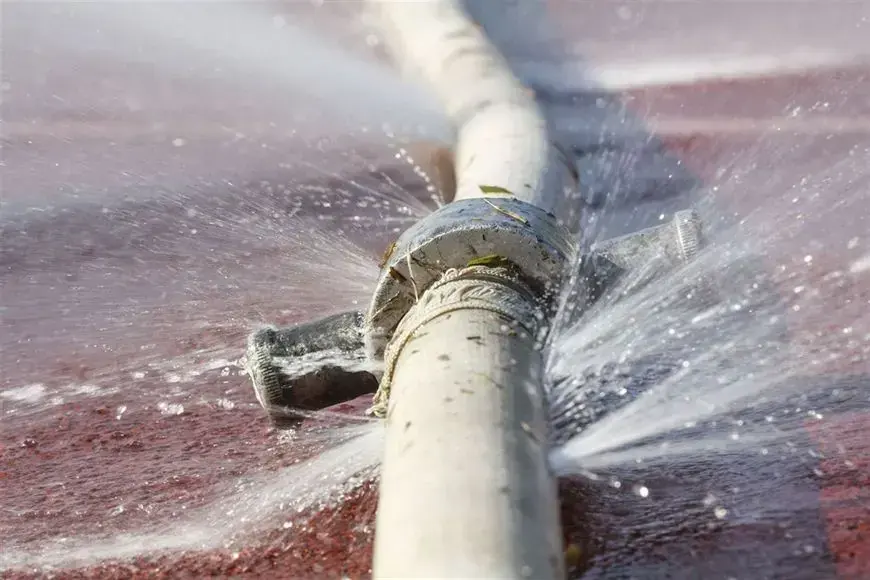
Most Goose Creek homes date from the 1970s to the 2000s, and some of the houses built from the late 1970s to the mid 1990s in this region have polybutylene supply pipe. When that kind of pipe fails, water arrives at full house pressure, often inside a wall, under a slab or in a crawl space.
Key takeaways
- Some late 1970s to mid 1990s homes in the region have polybutylene supply pipe, so a house from that period deserves attention.
- A failed supply pipe releases water at full house pressure, which is faster than most drain or appliance leaks.
- Warning signs include damp drywall, a warm or wet floor spot, a high water bill and the sound of running water when nothing is on.
- Shutting off the main water valve is the first step, and extraction and drying follow.
- Most Goose Creek homes sit on a slab or a vented crawl space, so hidden water can spread beneath the living space before anyone sees it.
Where older plastic supply pipe shows up in Goose Creek
Goose Creek is made up mostly of single family homes from the 1970s to the 2000s, built on slab or on a vented crawl space. Newer Carnes Crossroads homes date to the 2010s, and the older neighborhoods lie toward Crowfield Plantation, Sedgefield, Boulder Bluff, Brickhope, Liberty Hall and Marrington.
In this region, some homes built from the late 1970s to the mid 1990s have polybutylene supply pipe. It is a plastic pipe used inside walls, attics and crawl spaces to bring water to fixtures.
A home from that era may have it, may have had it replaced, or may never have had it.
- The era of a house is a clue, not proof.
- A plumber can identify the pipe and the type of fittings.
- Pipe markings are often visible in a crawl space or an exposed run.
How a failure shows up
A failure is not always dramatic. Water can seep for weeks before a stain shows, or a fitting can let go all at once.
The signs depend on where the pipe runs.
In a wall, damp drywall and peeling paint show first. Under a slab, a warm floor spot or a wet carpet edge may appear.
In a crawl space, the first sign is often a puddle or damp insulation.
Signs inside the house
Look for soft or discolored drywall, bubbling paint, a musty smell or a spot on the floor that feels warm. These point toward a hidden pipe.
- Damp baseboards in a room with no obvious source.
- Water stains that grow over several days.
- A floor that feels warm or damp in one spot.
- The sound of running water when every fixture is off.
Signs in the water bill
A bill that jumps with no change in use is a classic sign of a leak. Watching the water meter with every fixture off can confirm whether water is moving.
What to do in the first moments
A failed supply pipe keeps pouring water until the supply is stopped. The order of actions matters.
Shut off the water
Turn off the main water valve first. Most homes have one at the street or near the water heater, and the family should know where it is before an emergency.
Power and safety
If water is near outlets, appliances or the panel, power to that area should stay off until it is checked. Never stand in standing water near live electrical equipment.
Stop and photograph
Take photographs of the wet area, the damaged finishes and the pipe if it is visible. These help with a claim and with the plumber's diagnosis.
What the water does behind walls and under floors
Supply pipe water is clean when it leaves the pipe, but that does not make it harmless. It soaks drywall, insulation and flooring, and it feeds trouble if it sits.
The water follows the easiest path. In a slab home it moves under flooring and along the edges of rooms.
In a vented crawl space it soaks joists and insulation from below.
- Wet drywall wicks water upward, well above the visible stain.
- Wood flooring can cup or buckle as it absorbs moisture.
- Insulation holds water against framing and slows drying.
- Hidden water can run for a long time before it is found.
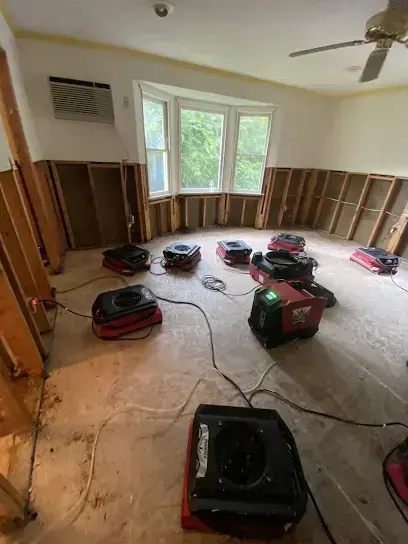
The cleanup after a supply pipe failure
Once the water is off, a restoration team finds how far the water went. Moisture meters and thermal cameras map the wet area, and the team opens only what the readings require.
Extraction removes standing water, and drying equipment is placed to bring wet materials down to a measured target. The burst pipe water damage service describes the process for a split pipe, and the slab leak water damage service covers leaks under concrete.
- Wet drywall and insulation are cut away if readings show saturation.
- Floors are dried in place where possible, using mats and equipment placed to draw water up.
- Humid Lowcountry air slows drying, so readings decide how long equipment runs.
Why hidden water costs more the longer it runs
A leak that is found early may only soak a single wall or a few feet of flooring. One that runs for days or weeks spreads across a room, then through the wall into the next one.
The time between the first leak and the first repair is the biggest factor in how much has to be removed. That is why a damp spot that cannot be explained should be checked right away, even if it looks small.
Common hiding places
Supply pipe runs through attics, behind tub surrounds, under kitchen cabinets and across crawl spaces. A leak in any of them can stay out of sight for a long time.
Repair and prevention
A restoration team dries the structure but does not fix the pipe. A plumber repairs or replaces the failed section, and an owner may decide with the plumber whether to replace more of the system.
After the plumber finishes, the water can be turned on and the drying continues. The water extraction service in Goose Creek explains how standing water is removed before drying begins.
- Ask a plumber to inspect the supply pipe in a house from the late 1970s to the mid 1990s.
- Know where the main shutoff is and that it turns easily.
- Check under sinks and in the crawl space from time to time for damp spots.
- Keep the water bill, because a sudden rise is an early warning.
Questions
Does every older Goose Creek home have polybutylene pipe?
No. Some homes built from the late 1970s to the mid 1990s in the region do, but many were never built with it or have had it replaced. A plumber can confirm.
How can a leak under a slab be found?
A warm spot on the floor, a high water bill or the sound of running water are common signs. Moisture meters and thermal cameras trace the wet area.
Is supply pipe water clean?
It starts clean, but it can soak drywall and insulation and feed damage if it sits, so it still needs extraction and drying.
What should be shut off first?
The main water valve. After that, power to wet areas should stay off until it is checked.
Does a restoration team repair the pipe?
No. A plumber repairs the pipe, and the restoration team extracts water and dries the structure.