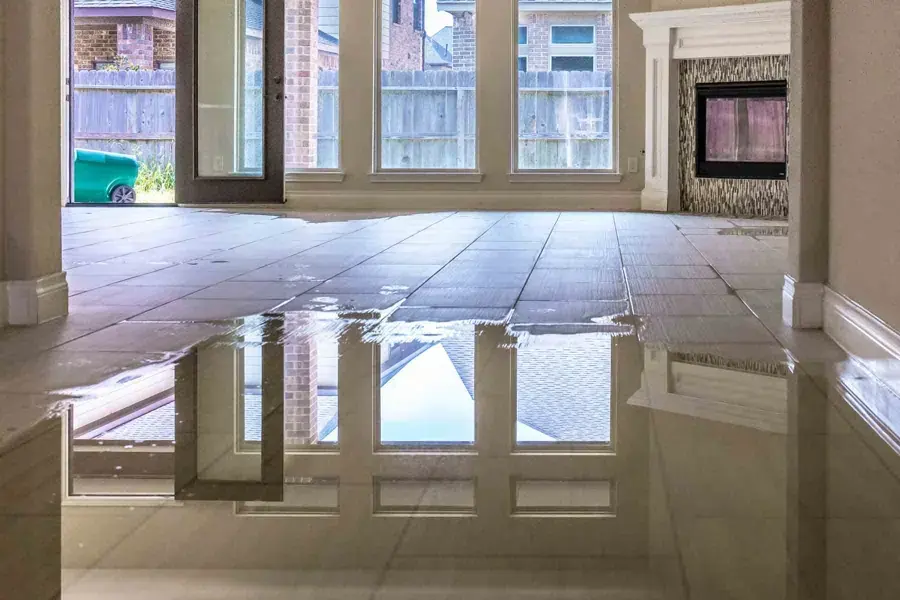
University of South Carolina researchers have flagged Hanahan as a place at risk of compound flooding, which means the area can flood in more than one way. For a homeowner, that changes what a cleanup has to account for.
Key takeaways
- Compound flooding means more than one source is at work, such as a creek, a king tide and heavy rain together.
- Hanahan has the Goose Creek Reservoir in the middle of the city, and Goose Creek can overflow during king tides or heavy rainfall.
- Turkey Creek water has reached a home on Brookside Drive more than once, notably after Hurricane Matthew in 2016 and Hurricane Irma in 2017.
- Floodwater that arrives from several directions leaves a wider area wet, so moisture checks should cover every wall and floor, not just the lowest room.
- Water from outside is treated as storm flood water, and porous materials it soaked are normally removed.
What compound flooding means at a front door
In plain terms, compound flooding is flooding that does not have just one cause. A creek can rise from rain upstream while the tide pushes back from downstream, and a downpour can fall on top of both.
The University of South Carolina team that identified Hanahan as at risk placed sensors from the Turkey Creek watershed into Hanahan, and the researchers are expected to work with the city for three years. They also noted that even small changes, such as removing a fence or widening a ditch, can change how floodwater moves.
- Rain falls on ground that is already saturated.
- A king tide holds creek water back so it cannot drain.
- A creek bank overtops and spills into a yard or street.
The water features around Hanahan
Hanahan sits at the south end of Berkeley County, and the Goose Creek Reservoir lies in the middle of the city. Several neighborhoods have tidal water behind them, with access to the Cooper River and Charleston Harbor.
Goose Creek itself can overflow in king tides or heavy rain, and Turkey Creek is the other named water feature in the pack of local facts. Those creeks are why a house in Hanahan can flood from a storm that seems modest on the radar.
Turkey Creek and Brookside Drive
Flooding from Turkey Creek has reached a home on Brookside Drive repeatedly, especially after Hurricane Irma in 2017 and Hurricane Matthew in 2016. A repeat flood shows why a record of each event, with photos and readings, is worth keeping.
Goose Creek and the reservoir
When the reservoir area and the creek both hold more water than usual, nearby yards and streets drain slowly. A tide that arrives at the same time makes the delay longer.
Storms Hanahan names as severe
The city itself names three events as severe flood events: the October 2015 storm, Hurricane Matthew in 2016 and the high tides of October 24 and 25, 2008.
Historic rainfall from October 1 to 4, 2015 caused severe flooding across Hanahan and South Carolina. Flooding from the remnants of Storm Erika in 2015 was also reported in Goose Creek, Hanahan and Magnolia Gardens.
The mayor said in September 2026 that flooding has been an issue for Hanahan from the day the city began in 1973. That history means many Hanahan homes have already seen water, and some have seen it more than once.
What a multi source flood changes in the cleanup
A flood that comes from several directions rarely leaves a neat high water mark. Water can enter at a back door from a creek while tide water seeps up through a slab joint at the front.
The result is a larger wet footprint. A cleanup that only treats the lowest room can miss walls and floors that took on water from another side.
- Moisture readings should be taken in every room that touches an exterior wall, not just the one with visible water.
- Wall cavities are checked at several heights, because wicking carries water above the visible mark.
- Soaked carpet pad, insulation and lower drywall are removed rather than dried in place.
- Hard surfaces and framing are cleaned and dried to a measured target.
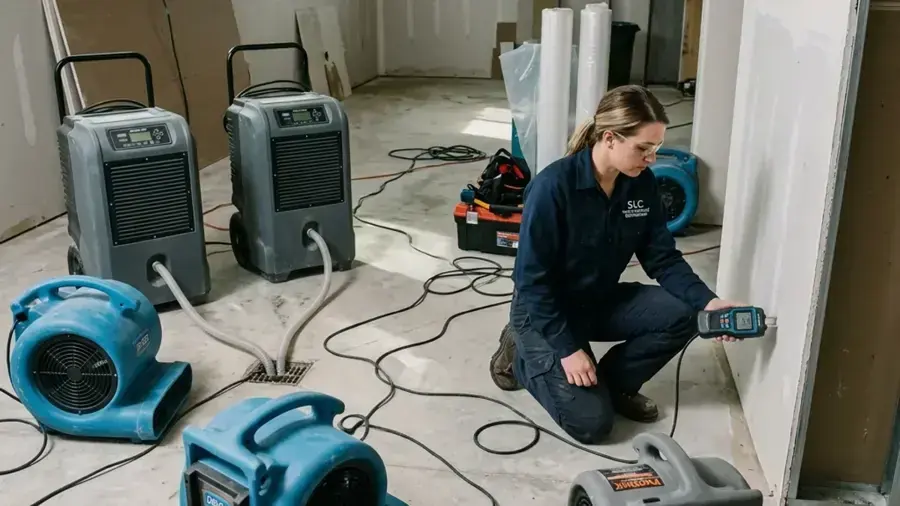
A sequence that works after outside water
The order of steps is the same whatever the source, but the details change when more than one source is involved.
Safety and power
Power should stay off to wet outlets and appliances until they are checked. Tidal water brings salt, which corrodes metal, so electrical equipment that sat in it deserves a closer look.
Removal and extraction
Standing water comes out first, followed by the materials that cannot be saved. Extraction in a house with tidal water behind it usually needs a second pass when the creek is still high.
Drying and monitoring
Lowcountry humidity slows drying, so wet walls and floors need monitored equipment rather than open windows. The crew logs readings until each material reaches its dry target.
Questions and records after a multi source flood
Because the water came from more than one place, a few extra questions are worth asking before the equipment is placed.
The answers shape the scope of work, and they are also the details an adjuster will ask about later.
- Which doors, vents or drains did the water use to get inside?
- Was the tide high at the time, or did the creek rise on rain alone?
- Has this part of the house taken on water before?
- Which walls share a surface with the outside, where water is most likely to sit behind the drywall?
- Are any fences, ditches or grading changes near the house that could have redirected the flow?
Why records matter when flooding repeats
A house that floods more than once benefits from a clean record of each event. Dated photographs, moisture logs and a short written note about the weather give owners something solid to refer to.
In a city where the mayor ties flooding to the city's start in 1973, those records are practical. They help with insurance, with repairs and with any later conversation about how water moves on the lot.
Where Hanahan owners can start
The storm water damage page for Hanahan explains how outside water is handled in the city, and the water extraction page for Hanahan covers the pump and extraction stage in more detail.
For the wider picture across Goose Creek, the storm water damage service page describes the same process for homes there. The Hanahan hub lists the other water problems the city sees.
Questions
What does compound flooding mean?
It means an area can flood in more than one way. In Hanahan that can be creek overflow, a king tide and heavy rain arriving together.
Has Turkey Creek flooded Hanahan homes before?
Yes. Turkey Creek water has reached a home on Brookside Drive repeatedly, especially after Hurricane Irma in 2017 and Hurricane Matthew in 2016.
Why does it take longer to dry a Hanahan home after a flood?
Lowcountry humidity slows drying, and tidal water adds moisture to the surrounding ground. Monitored equipment and readings replace guesswork.
Are floodwater materials dried or removed?
Porous materials such as carpet pad and insulation are normally removed. Framing and hard surfaces can be cleaned and dried.
Does a small ditch or fence change flooding?
The researchers said even small changes can change how floodwater moves, so the path of water on a lot can differ from one property to the next.