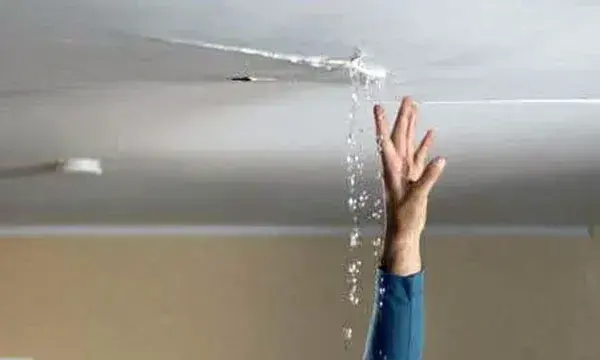
A stained or dripping ceiling usually traces back to a storm roof leak or a water source upstairs. The crew finds the origin of the water, opens what is wet and dries it.
First steps for ceiling leak water damage in Charleston
1
Stay out from under it
A bulging ceiling can drop without warning, so keep people and pets clear.
2
Turn off the lights
Leave fixtures under the stain off and shut the breaker if water reaches them.
3
Find the source
Check the room above and the attic if it is safe, and report anything seen.
4
Take photographs
Capture the stain, the ceiling and the room above before anything is cleaned up.
Ceiling Leak Water Damage: the trade facts
Common causesStorm roof leak or upstairs source
Urgent hazardLight fixtures and sagging drywall
MethodTrace, open, dry
Water categoryClean unless from a drain
Where a ceiling stains is not always where the water enters. Roof leaks during summer thunderstorms and failures in an upstairs bathroom or kitchen send water along joists before it drips. Many Charleston homes are rented, with 55.6 percent owner-occupied, so tenants and landlords both need a clear record of what happened.
What a wet ceiling can do
Drywall absorbs water, gets heavy and sags, and a bulge can fall without warning.
Water pooled above a light fixture can make the circuit unsafe, so the breaker stays off until checked.
Insulation above the ceiling holds water against the drywall long after the drip stops.
Stains can return after painting if the board or insulation is still damp.
Typical cost ranges
What does ceiling leak water damage cost in Charleston, SC?
A small stain caught early is the least expensive. Once drywall comes down and joists need drying, the price rises, and a leak that reached walls and the floor above is the largest tier because each layer needs its own drying.
Small stain, caught early
$900 to $2,200
Thermal mapping
Drying in place
Daily readings
Ceiling opened
$2,200 to $4,500
Wet drywall removed
Joist drying
Electrical checks
Ceiling, walls and floor above
$4,000 to $7,000
Subfloor drying above
Wall cavity drying
Flooring work
Ranges are typical figures, not a quote. The category of water, the square footage, the material class and how fast drying started move the number most. The water damage cost calculator gives a closer range.
Step by step
How ceiling leak water damage is handled in Charleston
The tech who does the walkthrough finds the source and maps the moisture before equipment goes down, and the drying team keeps it running until the readings say dry.
1
Trace
A thermal camera shows where the water traveled above the ceiling.
2
Open
Wet drywall and insulation are cut out and bagged.
3
Dry
Air movers and a dehumidifier work on the joists and cavity.
4
Test
Readings repeat until every surface reads dry.
01
How the source is traced
A thermal camera and meter show the wet area and the direction it spreads from. If the stain sits under a bathroom, the plumbing above is the suspect, and if it sits under the attic, the roof or the air conditioner is checked first.
02
Opening and drying
Sagging drywall is cut away so wet insulation can come out and the joist bays can dry. Air movers and a dehumidifier then run until readings match dry reference values, and repairs and painting wait for that final reading.
03
Renters, owners and the paperwork
In a rental, the tenant reports the leak and the owner arranges repairs, while the crew keeps photos and logs for either party's insurer. Related pages cover roof leak water damage and bathroom leak water damage.
Charleston, SC service area
Service area
Ceiling leak water damage across Charleston and nearby towns
Ceiling leak calls arrive from downtown and mainland neighborhoods in ZIP 29401 and 29407, such as South of Broad, French Quarter, Harleston Village, Avondale and Wagener Terrace.
Ceiling Leak Water Damage questions in Charleston, SC
Why is my ceiling stained when the roof looks fine?
Water travels along rafters and pipes before dripping, so the stain may sit far from the leak. A thermal camera traces the wet path to the real source.
Is a sagging ceiling an emergency?
Yes, because a heavy bulge can drop and wet drywall near fixtures is an electrical risk. Keep people away, switch off the breaker and call for help.
Can I just paint over the stain?
Paint covers the mark but not the water. If drywall or insulation is still damp, the stain returns and the board keeps weakening, so drying comes first.
Who pays when a tenant reports a ceiling leak?
The lease and the cause decide. The tenant reports promptly, the owner arranges repairs, and both benefit from photos and moisture logs kept by the crew.
How long before a wet ceiling grows mold?
Damp drywall and insulation can start growing mold if they stay wet, so opening and drying quickly matters more than any exact day count.
A leak above a ceiling keeps soaking drywall and insulation while the stain grows. The crew traces the water, opens what is wet and dries it until readings agree.