The drying sequence
The crew maps the wet area from inside and from the attic, removes saturated insulation, opens sagging drywall and sets air movers and dehumidifiers. Daily meter readings decide when equipment leaves, not how dry a surface feels.
Almost half of Charleston's rain falls from June to September, and lifted shingles or failed flashing let it into the attic. The crew dries the insulation, ceiling and walls below.
(888) 532-8921Roof leaking? Call for drying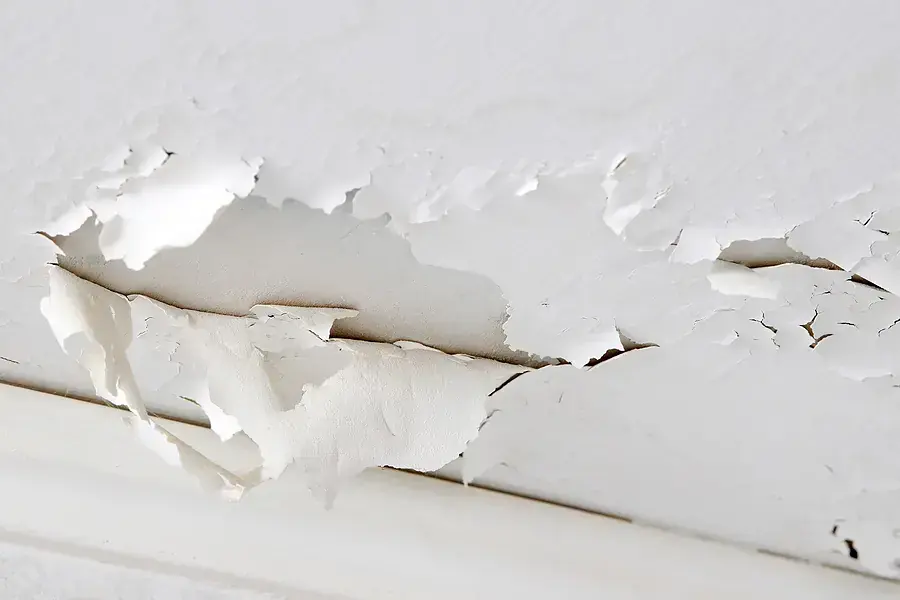
Place a bucket or tarp under the leak and move furniture and electronics out of the way.
Leave lights and fans in a wet ceiling off, and switch off the breaker if water drips through a fixture.
Photograph the ceiling, any safe attic view and roof damage seen from the ground.
Roof repair stops the leak, while the restoration crew dries what already got wet.
Storm Roof Leak Water Damage: the trade facts
Charleston gets almost half of its yearly rain between June and September, mostly in thundershowers, and tropical systems add wind-driven rain. Lifted shingles, cracked flashing and loose vent boots let water into the attic, where it soaks insulation and then drips through the ceiling below.
A single stained ceiling area sits at the low end, while water that soaked several rooms or ran down walls into flooring costs far more. The tiers show how insulation, drywall and floor work add up.
$1,200 to $3,000
$3,000 to $6,000
$5,500 to $9,000
Ranges are typical figures, not a quote. The category of water, the square footage, the material class and how fast drying started move the number most. The water damage cost calculator gives a closer range.
The tech who does the walkthrough finds the source and maps the moisture before equipment goes down, and the drying team keeps it running until the readings say dry.
Attic and ceiling readings show how far the roof water spread.
Wet insulation and sagging drywall are pulled so air can reach the framing.
Air movers and dehumidifiers run on the ceiling cavity and the rooms below.
Readings on joists, deck and drywall are logged until they match dry targets.
The crew maps the wet area from inside and from the attic, removes saturated insulation, opens sagging drywall and sets air movers and dehumidifiers. Daily meter readings decide when equipment leaves, not how dry a surface feels.
A roofer must find and fix the entry point, and tarping may be needed before the next storm. Restoration work and roof repair are separate trades, so keeping the roofer's invoice and photos helps the claim file. Tarps and boards buy time, but they are not a lasting fix.
If water reached walls or floors, drying extends to those layers and may involve ceiling leak water damage steps and structural drying equipment. Storm-driven jobs often combine both.
Roof leak calls come from ZIP 29412 and 29407 and from mainland neighborhoods such as James Island, Johns Island, West Ashley, Avondale, Old Windermere and Byrnes Downs.
The same service nearby: storm roof leak water damage in Goose Creek, Hanahan, North Charleston.
Water travels along rafters and decking before dripping, so the visible stain can sit well away from the entry point. A meter finds the true wet area.
Usually not. Saturated insulation holds water against the drywall and stays wet for a long time, so the crew removes it and bags it.
Rain entering through the roof is a sudden roof leak, not flood water, and it is usually clean at first. The policy decides coverage, so ask the insurer about wind and rain terms.
A ceiling that sags or holds water should come down promptly, since the weight can drop it. Small stains with dry readings may only need drying in place.
A roofer repairs shingles, flashing or vents. The restoration crew dries the interior, and both sets of photos and invoices support the claim.
Wet insulation and drywall can grow mold when they stay damp, so removal and drying start quickly.
Roof water inside the house?
Wet insulation and drywall hold water long after the rain stops. The crew opens what is soaked and dries the rest with readings logged for the adjuster.