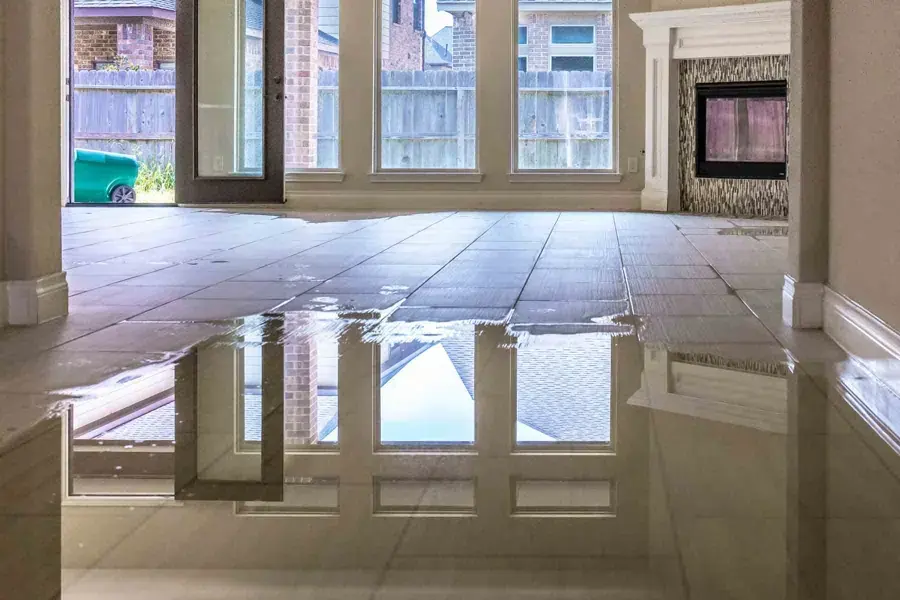
Charleston sits where the Ashley, Cooper and Wando rivers meet and flow into the Atlantic Ocean, and the historic peninsula is surrounded by water on three sides. When a storm pushes tide or rain into a building, the water that arrives is outside flood water, and it calls for a particular kind of cleanup.
Key takeaways
- Water that enters from a street, a yard or the harbor is storm flood water, not a plumbing leak, and it is handled as contaminated.
- Hurricane Matthew in October 2016 and Tropical Storm Irma in September 2017 both brought surge flooding to Charleston.
- The October 2015 flood brought 15 to 20 inches of rain, and high tides made flooding worse downtown.
- Areas outside the FEMA flood hazard area can still have local drainage problems, so a low spot can flood even on a map that looks safe.
- Standing water should be removed first, then wet pad, insulation and lower drywall, with the rest dried to measured targets.
Why Charleston floods from the water and from the sky
The flood prone part of the Charleston peninsula sits on what was formerly marshland and creeks, according to NOAA. Streets built over old creek beds still collect water when rain and tide arrive together.
The city floodplain page names the Stono, Ashley, Cooper and Wando rivers as sources of flood hazard, along with Wappoo Creek, Orangegrove Creek, James Island Creek, Church Creek and small tidal creeks.
- Heavy rain falls faster than low streets can drain.
- A high tide holds water back in pipes and creeks.
- Storm surge pushes harbor water over banks and into buildings.
Storms Charleston owners measure against
Several storms set the local yardstick. Hurricane Hugo's eye came ashore at Charleston Harbor in 1989 and caused over $2.8 billion in damage, and three quarters of the homes in the historic district sustained damage of varying degrees.
The October 1 to 5, 2015 flood brought widespread rainfall of 15 to 20 inches, with localized amounts over 25 inches, and high tides made flooding worse along the coast, especially downtown.
Hurricane Matthew
Hurricane Matthew made landfall near McClellanville on October 8, 2016 as a Category 1 hurricane, and the National Weather Service reports storm surge flooding in Charleston was extensive.
Tropical Storm Irma
Tropical Storm Irma on September 10 and 11, 2017 brought a peak storm tide of 9.92 feet to Charleston Harbor, the third highest on record.
A smaller event in July 2021
After heavy rainfall in July 2021, city crews used pumps in low lying areas to help with drainage. Even a rain event without a named storm can put water in a ground floor room.
What counts as flood water inside a building
A burst pipe puts clean water in a room. A storm does not.
Water from the harbor, a street or a creek has crossed ground and carries soil, debris and bacteria.
For that reason, porous materials that absorb flood water are normally removed rather than dried: carpet pad, insulation, the lower sections of drywall and some cabinet parts. Framing, tile and sealed concrete can be cleaned and dried.
- Take pictures of the high water mark on walls before anything moves.
- Do not walk through standing water if the power is on.
- Keep children and pets out of the affected rooms.
- Set aside damaged belongings so the insurer can inspect them.
The first day after water gets in
A short sequence keeps the damage from spreading. Each step sets up the next one, so skipping ahead tends to cost time.
Safety first
If water has reached outlets, the panel or appliances, power should stay off until they are checked. Tide water carries salt, which corrodes electrical contacts, so equipment that sat in it deserves a look before it is turned on.
Water out
Extraction begins as soon as access is safe. Standing water that sits keeps moving upward into drywall and cabinets by wicking, so removal comes before any drying equipment goes in.
Material sorting
The team walks every room with a moisture meter and divides materials into those that can dry and those that cannot. The list becomes the scope of work and a record for the claim.
Drying in a humid, coastal city
Charleston has a humid subtropical climate, and almost half of the annual rainfall comes from June to September, mostly in thundershowers. The air is damp for much of the year, which makes drying slower than in a dry climate.
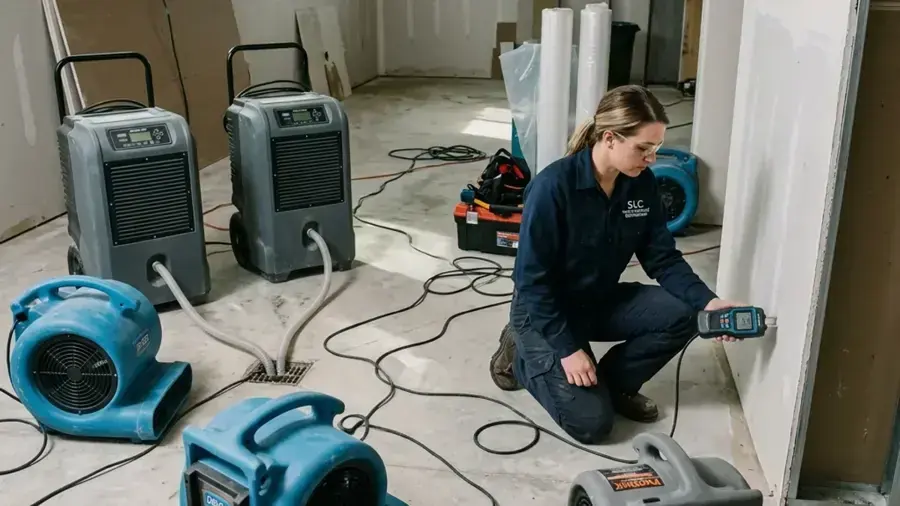
That is why wet walls and floors need monitored equipment rather than open windows. Air movers push dry air across surfaces, dehumidifiers pull water out of the air, and moisture readings tell the team when the target has been met.
- Readings are taken on the first visit and repeated until the structure is dry.
- Wall cavities may be opened where readings show water behind the drywall.
- Equipment is moved as the wet area shrinks.
Older buildings, permits and renters
Some Charleston properties have Historic Charleston Foundation or Preservation Society of Charleston easements, which can complicate permit approval. A restoration plan for a protected building may need extra steps before repairs begin.
The City of Charleston Permit Center handles building, mechanical, electrical, plumbing and fuel gas permits and inspections. Charleston County building officials say the current homeowner is liable for fines and retroactive permits for unpermitted work, so permit questions are worth settling early.
Tenants and landlords after a flood
A large share of Charleston homes are rented, because the owner occupied housing unit rate is 55.6 percent. That makes the tenant and landlord conversation part of nearly every cleanup.
A tenant should report the water in writing and keep photographs, and a landlord should arrange extraction and drying quickly, since damage spreads through walls and floors the tenant cannot see.
Where to go next
The storm water damage page for Charleston explains how outside water is handled in the city, and the water extraction page for Charleston covers the pumping stage.
For the wider process, the storm water damage service in Goose Creek and the water extraction service describe the same steps, and the Charleston hub lists the other water problems the city sees.
Questions
Is storm tide water different from a pipe leak?
Yes. Tide and rain water from outside is contaminated, so porous materials it soaked are normally removed rather than dried.
Can a building outside the flood hazard area still flood?
Yes. Areas outside the FEMA Special Flood Hazard Area can still have local drainage problems, unmapped floodplains or sea level rise exposure.
How high did the water get during Irma?
Tropical Storm Irma brought a peak storm tide of 9.92 feet to Charleston Harbor, the third highest on record.
Why does drying take so long in Charleston?
The climate is humid subtropical, so the air holds moisture for much of the year. Monitored equipment and readings replace open windows.
Do historic properties need anything extra?
Some have preservation easements that can complicate permit approval, so repairs may need extra steps through the City of Charleston Permit Center.
Who is liable for unpermitted work?
Charleston County building officials say the current homeowner is liable for fines and retroactive permits for unpermitted work.