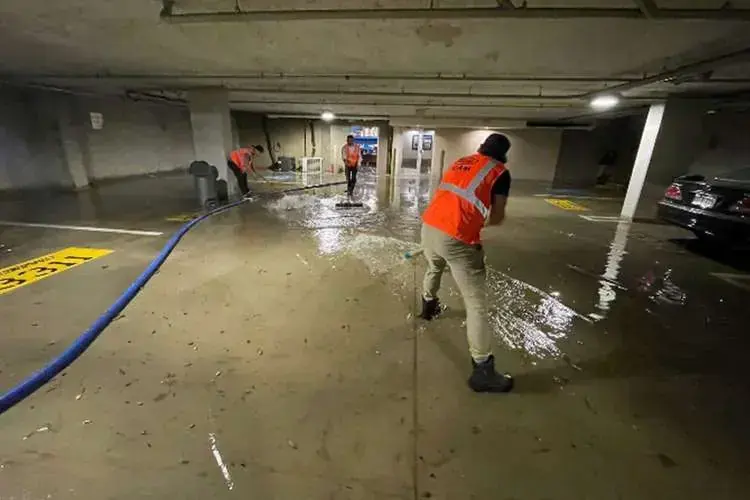
After tide flooding or a heavy downpour, standing water is pumped off floors before it wicks into drywall, pad and wood. Truck-mounted and portable units handle rooms of any size.
First steps for emergency water extraction in Charleston
1
Stay clear
Keep out of standing water until the power is confirmed off and the source is known.
2
Stop the flow
Close the valve on a leaking fixture or appliance, since pumps cannot outpace a running source.
3
Lift small items
Move rugs, electronics and paper off wet floors, but leave heavy furniture for the crew.
4
Note the depth
Photograph standing water against a wall or chair leg for the adjuster.
Emergency Water Extraction: the trade facts
GoalRemove water before it wicks
ToolsTruck-mounted and portable pumps
Next stepDrying with dehumidifiers
Water categorySet by the source
High tide flooded Hagood Avenue in September 2020, and heavy rain can fill ground floors anywhere in the city. When water stands inside, speed matters, because drywall, pad and wood floors keep absorbing every hour it stays.
What extraction removes
Standing water on tile, concrete and hard floors, pulled with truck-mounted or portable pumps.
Water trapped in carpet and pad, extracted by weighted tools before the pad is judged for removal.
Water under hardwood, drawn up through drying mats that pull moisture from the boards.
Pooled water in a crawl space or garage, cleared with high-volume pumps and hoses.
Typical cost ranges
What does emergency water extraction cost in Charleston, SC?
Pumping one room is the lowest-cost service on the site, while a whole floor or crawl space needs high-volume equipment and takes longer. Contaminated water adds handling steps and raises the total.
One room
$600 to $1,500
Portable extraction
Carpet or hard floor
Moisture check
Several rooms
$1,400 to $3,000
Truck-mounted extraction
Pad removal if needed
Hardwood mats
Whole floor or crawl space
$2,800 to $4,500
High-volume pumping
Crawl space extraction
Category 3 handling
Ranges are typical figures, not a quote. The category of water, the square footage, the material class and how fast drying started move the number most. The water damage cost calculator gives a closer range.
Step by step
How emergency water extraction is handled in Charleston
The tech who does the walkthrough finds the source and maps the moisture before equipment goes down, and the drying team keeps it running until the readings say dry.
1
Assess
The technician checks depth, water category and the path the water took.
2
Pump
Truck-mounted or portable units remove standing water from every affected room.
3
Extract
Weighted tools and drying mats pull water from carpet, pad and wood.
4
Hand off
Readings decide whether the job moves to structural drying.
01
What happens after the water is out
Pumping removes only the standing water. Moisture still sits in framing, subfloor and wallboard, so the technician takes readings and decides what comes out and what dries in place. Drying follows, covered on the structural drying page.
02
Clean water and contaminated water
Extraction from a pipe failure is a different job from pumping tide or sewage water. The crew sorts the source first, wears protective gear for contaminated water and bags what cannot be saved. See sewage backup cleanup for black water.
03
Who needs it most
Garages, ground floor rooms and crawl spaces take the water first after a storm. Tenants and owners both benefit from early extraction, since less wet material means a smaller repair for whoever pays for it.
Charleston, SC service area
Service area
Emergency water extraction across Charleston and nearby towns
Extraction crews reach ZIP 29401 and 29403 on the peninsula and neighborhoods such as Harleston Village, Ansonborough, French Quarter and Radcliffeborough, plus Daniel Island across the Cooper River.
Emergency Water Extraction questions in Charleston, SC
How quickly does water need to come out?
As soon as possible, since wallboard, pad and wood absorb water for as long as it stands. Early extraction cuts the amount of material that has to be removed.
Can carpet be saved after extraction?
Carpet from a clean source can often be extracted and dried, while pad usually comes out. Carpet soaked by tide or sewage water is normally discarded.
Will hardwood floors survive?
Drying mats and fast extraction can save some hardwood, but cupping may appear later. Readings tell the crew whether the boards are drying evenly.
Does extraction include drying?
Extraction pulls the standing water. Drying with air movers and dehumidifiers is a separate step, measured on its own.
Can a flooded garage or crawl space be pumped?
Yes, high-volume pumps clear both. Garage and crawl space water is checked for contamination before the crew decides how to handle it.
Every hour water stays on a floor, more of it moves into walls and subfloor. Extraction ends the spread, and the readings that follow show what needs drying.