Commercial Water Damage Restoration in Charleston, SC
A flooded restaurant, shop or office loses money every hour it stays closed. The crew phases extraction and drying around operations, works after hours when needed and keeps documentation for the carrier.
After-hours crews Containment between suites Phased drying
Right now
First steps for commercial water damage in Charleston
1
Protect people
Close wet areas to customers and staff until the source is known.
2
Shut off the source
Close the shutoff for a plumbing break and cut power to wet zones.
3
Move stock and records
Lift inventory, files and electronics off wet floors.
4
Photograph the loss
Capture each room, the stock affected and any damaged equipment.
Commercial Water Damage: the trade facts
Property typesHotels, restaurants, shops, offices
Work stylePhased and after hours
PermitsCity of Charleston Permit Center
RecordsDaily logs for the carrier
Charleston's hotels, restaurants, shops, College of Charleston buildings and Daniel Island offices all face the same tide, storm and plumbing water risks as a home, with higher stakes. A flooded dining room or lobby cannot wait, and the work must protect the guests, staff and stock that remain.
How business jobs differ
Containment barriers keep dust, odors and equipment noise out of areas still in use.
Carpet tile, ceiling tile and drywall are removed in sections, so part of the space can reopen sooner.
Work is scheduled around opening hours, with after-hours crews on larger losses.
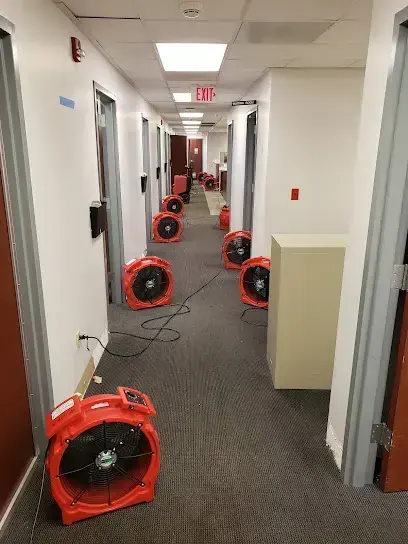
Equipment is sized for large open rooms, long hallways and shared walls between suites.
Typical cost ranges
What does commercial water damage cost in Charleston, SC?
One wet suite or room is the smallest commercial job. Several suites add containment, after-hours work and phased drying, while a whole building or a Category 3 loss reaches the top because of scale, cleaning and time.
One suite or room
$3,000 to $9,000
Extraction
Carpet tile and drywall work
Drying
Several suites
$9,000 to $25,000
Containment between areas
After-hours work
Phased drying
Whole building or Category 3
$22,000 to $50,000
Wide removal
Antimicrobial treatment
Extended drying
Ranges are typical figures, not a quote. The category of water, the square footage, the material class and how fast drying started move the number most. The water damage cost calculator gives a closer range.
Step by step
How commercial water damage is handled in Charleston
The tech who does the walkthrough finds the source and maps the moisture before equipment goes down, and the drying team keeps it running until the readings say dry.
1
Assess
The crew maps wet areas, identifies the water category and plans phases.
2
Contain
Barriers and air filtration separate the work zone from rooms still in use.
3
Extract
Pumps pull water, then wet carpet tile and drywall come out.
4
Dry
Dehumidifiers and air movers run in phases until readings reach target.
01
Water categories in commercial spaces
A supply break in an office is clean water, but a restaurant grease trap overflow or a toilet backup is contaminated. Tide and storm water entering a ground-floor lobby is treated as Category 3, and the crew adjusts removal accordingly.
02
Permits, tenants and landlords
Building, mechanical, electrical and plumbing permits and inspections go through the City of Charleston Permit Center. In leased space, the crew records which areas belong to which tenant, so landlords, tenants and carriers each see their own scope.
03
Documentation and continuity
Daily logs, photos and moisture maps show the carrier what was wet and when it dried. Owners also get a summary that helps with business interruption claims, and the underlying steps appear on the structural drying and water extraction pages.
Charleston, SC service area
Service area
Commercial water damage across Charleston and nearby towns
Commercial water work covers ZIP 29401 and 29403, including downtown, the College of Charleston area, Daniel Island and the Savannah Highway corridor, and neighborhoods such as Ansonborough and Harleston Village.
Commercial Water Damage questions in Charleston, SC
Can a business stay open during water cleanup?
Often partly. Containment, phased work and after-hours crews let unaffected areas keep operating while the wet zone is dried.
Who handles the carrier paperwork?
The crew provides photos, moisture maps, equipment logs and an itemized scope. The owner or manager submits them, and the adjuster checks each step.
Is a sprinkler or supply leak clean water?
Usually yes at first, which helps more material dry in place. Water from drains, toilets or flooding outside is contaminated and handled differently.
What about tenants in neighboring suites?
Moisture maps check shared walls and ceilings, and the crew documents each tenant's area so landlords and carriers see the same record.
Do permits apply to commercial repairs?
Rebuilding work typically needs permits through the City of Charleston Permit Center. Drying itself usually comes first, and dry records show what was removed.
Every day a space stays wet costs revenue and risks more material. The crew sets containment, phases the work around operations and logs readings until the building is dry.