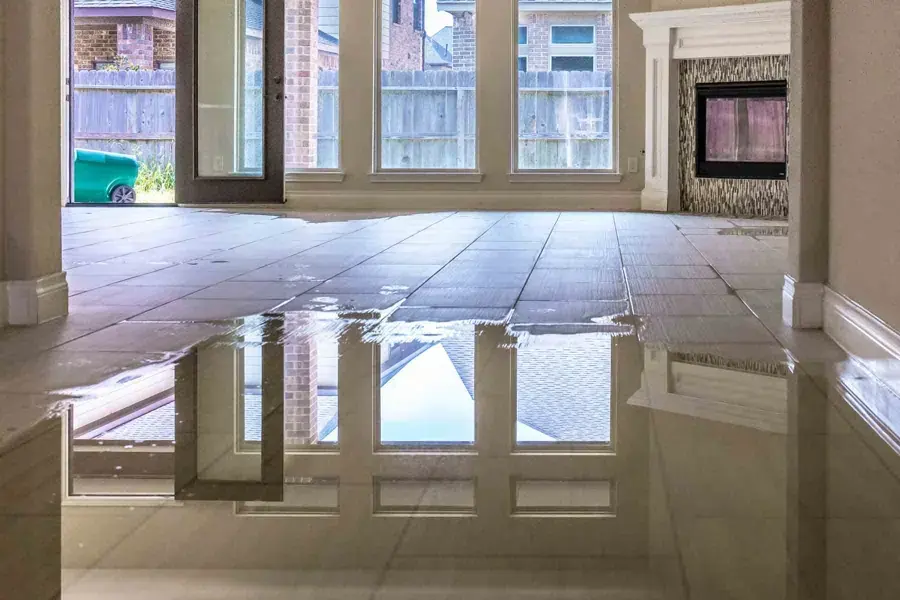
Rain that rushes in from outside carries soil and bacteria. In Summerville, crews pump the flood water, cut out soaked drywall and flooring, disinfect the structure and dry it to readings the insurer can verify.
Category 3 water handling High-volume pumping Flood cut and disinfect
Right now
First steps for hurricane and storm water damage in Summerville
1
Get out of the water
Leave flooded rooms, because standing water can hide live outlets, sharp debris and sewage contamination.
2
Check the panel first
Switch off breakers only if the panel sits in a dry spot. If it does not, wait for a qualified electrician.
3
Photograph the water mark
Take wide and close photos of how high the water reached before anything is moved.
4
Call for pumping
Dispatch sends a crew with pumps and disinfectants while the rest of the house stays closed up.
Hurricane and Storm Water Damage: the trade facts
Water typeCategory 3, outdoor flood water
First movePump out, then strip porous materials
Dry timeSeveral days
PaperworkPhotos, readings and a written scope
Storm water damage differs from a pipe leak because the water arrives carrying soil, yard runoff and bacteria. Tropical Storm Debby in August 2024 closed all major roads west of Summerville, and historic rain in October 2015 hit the Charleston tri-county area, so storm flooding is a real part of the local picture. Once water crosses a threshold it is treated as contaminated, and the plan starts with removal of what it touched. The sooner it comes out, the less of the house has to be torn out.
What a storm flood cleanup includes
Pumping and extraction of standing water from living areas, garages and any raised floor space, with truck-mounted units for large volumes.
A flood cut that removes drywall and insulation above the water mark, so wet cavities are opened and allowed to dry, while carpet and pad that soaked up flood water are bagged and hauled out.
Disinfecting with an EPA-registered antimicrobial on framing, subfloor and every surface the water touched, before any drying gear is set.
Structural drying with air movers and LGR dehumidifiers, checked with a moisture meter each day until framing reads dry.
Typical cost ranges
What does hurricane and storm water damage cost in Summerville, SC?
Storm water jobs usually land between $3,500 and $32,000. One shallow room sits at the bottom, several rooms land in the middle and a whole flooded floor reaches the top, because removal and drying scale with the area.
One room, shallow water
$3,500 to $8,500
Pumping and a flood cut
Wet carpet and pad hauled away
Antimicrobial, then drying
Several rooms
$8,000 to $18,000
Flooring pulled in every wet room
Soaked wall insulation removed
Containment with HEPA filtration
Whole floor flooded
$16,000 to $32,000
Wide removal and cleaning
Extended structural drying
Belongings moved out of the way
Ranges are typical figures, not a quote. The category of water, the square footage, the material class and how fast drying started move the number most. The water damage cost calculator gives a closer range.
Step by step
How hurricane and storm water damage is handled in Summerville
The tech who does the walkthrough finds the source and maps the moisture before equipment goes down, and the drying team keeps it running until the readings say dry.
1
Extract
Truck-mounted and portable pumps clear the flood water from every low spot.
2
Open up
Soaked drywall, insulation and carpet come out above the water mark so cavities can breathe.
3
Sanitize
An EPA-registered antimicrobial goes onto framing and subfloor.
4
Monitor
Air movers and dehumidifiers run while daily readings track each wet material down to dry.
01
Why storm water gets different handling
Flood water crossing a threshold or rising from a yard counts as Category 3 even when it looks clear. Bacteria, sediment and chemicals ride in with it, which is why drywall and carpet that sat in it are usually removed rather than dried in place. Cleaner-looking water earns no exception.
02
How Summerville flooding shapes the job
Roads over Four Hole Swamp west of town close in major rain, and Dorchester County water rescue teams were called out during the August 2024 flooding. Homeowners who see water rising should move valuables up, photograph the water mark and leave the heavy lifting to a trained crew that has the pumps, protective gear and disinfectants. Rising water is also a reason to stay out of flooded rooms until the power is confirmed off.
03
Next steps
Once the structure is dry and the readings match, the file is ready for the adjuster. Related pages cover water extraction for the pumping stage, structural drying for the equipment stage and the Summerville hub for every other service. A written scope lists each material removed and the reason, which keeps the claim conversation short.
Summerville, SC service area
Service area
Hurricane and storm water damage across Summerville and nearby towns
Storm water work covers ZIP codes 29483, 29485 and 29486, including the Summerville Historic District, Azalea Ridge, Cambridge Park, Heron's Walk, Homecoming, Parker's Preserve and Pine Hill Business Park.
Hurricane and Storm Water Damage questions in Summerville, SC
Is flood water always Category 3?
Water from outdoors, yards or storm drains is treated as Category 3 because of what it carries, even when it looks clean to the eye.
Can flooded drywall be saved?
Usually not. Wet drywall that sat in storm water is cut out above the water mark, since it holds bacteria and loses strength.
Does homeowners insurance cover storm flooding?
Rising flood water often needs separate flood coverage, while wind-driven rain through storm damage may fall under a standard policy. The adjuster decides, so document everything.
When can rebuilding start?
After moisture readings on framing and subfloor match dry reference levels and the crew signs off on the written dry report.
Is it safe to stay in the house?
Not while flood water is inside. Contaminated rooms are best avoided, especially by children, older adults and anyone with a weak immune system, until cleanup is done.
Why does drying take several days?
Humid Lowcountry air slows evaporation, and framing and subfloors hold moisture deep inside, so equipment runs until readings confirm it is dry.
Still dealing with it?
Rising storm water inside the house? Call for pumping.