Rust, minerals and sediment
Tank water can carry rust and mineral sediment that stains flooring, so surfaces are cleaned as they dry. The water is typically clean at the start, which lets more materials dry in place when the crew arrives promptly.
A failing tank or loose fitting can leak into a closet, garage or hall floor for days before anyone notices. The crew pulls the water, checks the walls and dries the area.
(888) 532-8921Heater leaking? Call the crew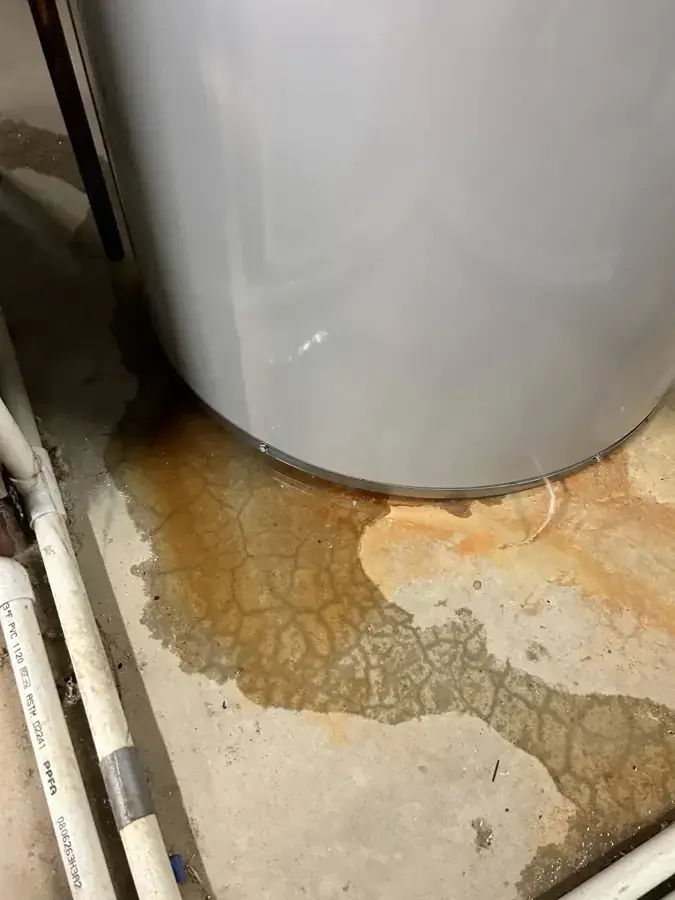
Close the cold water valve on top of the heater to stop refilling the tank.
Turn off the breaker or the gas valve for the unit before going near wet ground.
Lift boxes, stored items and rugs off the wet floor right away.
Capture the tank label, the leak spot and the water spread for the file.
Water Heater Leak Cleanup: the trade facts
Water heaters sit in closets, garages and attics, so a slow drip can go unseen until a floor swells or a wall stains. A failing tank or a loose supply fitting can release a steady flow, and the water spreads under walls into carpet and nearby rooms before anyone smells dampness.
A leak onto a bare garage floor is the smallest job. Water that reached a closet, carpet and nearby rooms needs pad removal and structural drying, and an attic unit that leaked through the ceiling sits at the high end.
$900 to $2,000
$2,000 to $4,000
$3,800 to $6,000
Ranges are typical figures, not a quote. The category of water, the square footage, the material class and how fast drying started move the number most. The water damage cost calculator gives a closer range.
The tech who does the walkthrough finds the source and maps the moisture before equipment goes down, and the drying team keeps it running until the readings say dry.
Pumps and wet vacuums clear the closet, garage or hall floor.
A meter tests wall bases, pad and ceilings for hidden moisture.
Saturated pad, baseboard and lower drywall come out.
Air movers and a dehumidifier finish the area.
Tank water can carry rust and mineral sediment that stains flooring, so surfaces are cleaned as they dry. The water is typically clean at the start, which lets more materials dry in place when the crew arrives promptly.
A plumber replaces or repairs the tank, and plumbing permits go through the City of Charleston Permit Center. The crew documents the leak area before and after repair, and the file supports the claim with dated photos and readings.
A heater in an attic or upper closet sends water down through the ceiling, so the rooms below are scanned too. See ceiling leak water damage and water extraction for the related steps.
Water heater leak calls come from ZIP 29407 and 29414 and from neighborhoods such as Avondale, Wagener Terrace, Hampton Park, James Island, Johns Island and West Ashley.
The same service nearby: water heater leak cleanup in Goose Creek, Hanahan, North Charleston.
Common causes are a rusted tank, a loose fitting or a failed relief valve. A plumber identifies the part, and the crew handles the wet floor.
If the water was clean and the carpet was caught early, extraction and drying can save it. Pad usually comes out when it stays soaked.
Yes. A slow drip soaks the wall base and subfloor over weeks, and hidden moisture can damage framing and flooring before a stain appears.
Sudden leaks are often covered, but the tank itself usually is not. The policy and the cause decide, so share the drying logs with the adjuster.
Plumbing permits and inspections go through the City of Charleston Permit Center, and the plumber normally handles them.
Water heater leaking?
A tank leak soaks floors and wall bases quietly. The crew extracts the water, checks what it touched and dries the area until the readings are normal.